A raffle draw is the process of randomly selecting winning ticket numbers from all entries. You can conduct a raffle draw manually (pulling tickets from a container), digitally (using raffle software with animated displays), or with a hybrid approach. Digital draws are faster, more transparent, and eliminate human error.
Whether you are organizing a charity fundraiser, a school event, or a corporate team-building activity, the way you conduct your raffle draw directly affects the audience experience, perceived fairness, and overall success of your event. This guide covers everything you need to know, from choosing the right method to selecting the best raffle draw app for your needs.
| Draw Method | Speed | Transparency | Best For | Cost |
|---|---|---|---|---|
| Manual (drum/bowl) | Slow | Moderate | Small community events | Free |
| Digital software | Fast | High | Fundraisers, galas, live events | $77-97 |
| Random number generator | Instant | Low | Casual picks, informal drawings | Free |
| Hybrid (physical + display) | Medium | High | Large events with traditional audiences | Varies |
What Is a Raffle Draw?
A raffle draw is the process of randomly selecting one or more winning tickets from a pool of sold entries. Each participant purchases a ticket (or receives one for free, depending on the event), and the draw determines who wins the prize. The concept is simple, but the execution can vary dramatically -- from pulling slips of paper out of a bowl to using sophisticated software with live animations and projected displays.
At its core, every raffle draw shares two essential qualities: randomness and transparency. The draw must be genuinely random so that every ticket has an equal chance of winning. And it must be transparent enough that participants trust the outcome. How you achieve those two goals depends on the method you choose.
If you are new to raffles in general, our complete guide to raffles covers the fundamentals, including different raffle formats, ticket types, and legal considerations.
Manual vs. Digital Raffle Draw Methods
The first decision you will face when planning a raffle draw is whether to go manual or digital. Each approach has strengths, weaknesses, and ideal use cases. Understanding the trade-offs will help you pick the right one for your event.
Manual Draw Methods
Manual draws are the traditional approach. Think paper tickets in a drum, names drawn from a hat, or numbered ping pong balls tumbling in a cage. These methods have been used for centuries and still work well for small, informal events.
Advantages of manual draws:
- No technology required -- works anywhere, even without electricity
- Physically tangible -- participants can see and touch the tickets
- Low cost for small events
- Simple to understand -- no learning curve
Disadvantages of manual draws:
- Difficult to verify true randomness (tickets can stick together, settle at the bottom, etc.)
- Time-consuming for large numbers of tickets
- No automatic record-keeping
- Harder to create a visually exciting experience for a large audience
- Susceptible to accusations of bias, even when conducted fairly
Digital Draw Methods
Digital raffle draws use software to generate random numbers or select random entries from a database. These range from simple random number generators to purpose-built raffle drawing tools with visual displays, animations, and audience-facing presenter modes.
Advantages of digital draws:
- Certified randomness through algorithms that have been mathematically proven fair
- Instant results, even with thousands of tickets
- Automatic record-keeping and audit trails
- Visual displays that engage audiences in large venues
- Reduced opportunity for human error or manipulation
- Support for complex formats like reverse raffles and multi-round drawings
Disadvantages of digital draws:
- Requires a device (laptop, tablet, phone) and usually a projector or screen
- Some audience members may not understand or trust digital randomness
- Monthly or annual cost for premium tools
Side-by-Side Comparison
Here is how manual and digital raffle draw methods stack up across the factors that matter most:
| Factor | Manual Draw | Digital Draw |
|---|---|---|
| Randomness | Hard to verify | Algorithmically provable |
| Speed | Slow (1-2 min per draw) | Instant or timed |
| Audience engagement | Limited visibility | Full-screen animations |
| Record-keeping | Manual logging | Automatic |
| Scalability | Maxes out around 200-300 tickets | Handles thousands |
| Cost | Free (materials only) | Free to $97/year |
| Trust factor | Visual (they see the ticket) | Algorithmic + visual |
| Best for | Small, casual events | Events of any size |
See rafflr in Action
Watch a 2-minute demo of how easy it is to create and run a reverse raffle with rafflr
How to Run a Raffle Draw: Step by Step
Whether you choose a manual or digital method, the process of running a raffle draw follows a consistent set of steps. Here is the complete workflow from start to finish.
Step 1: Define Your Raffle Format
Before you can draw, you need to decide what kind of raffle you are running. The format determines how the draw itself works.
- Standard raffle: Draw one or more winning numbers. Simple, fast, and the most common format.
- Reverse raffle: Draw tickets one at a time, eliminating them from the pool. The last ticket remaining wins the grand prize. This format creates sustained suspense and is ideal for dinner events.
- 50/50 raffle: Half the ticket revenue goes to the winner, half to the organization. The draw itself works like a standard raffle.
- Multi-prize raffle: Draw multiple winners across several prize tiers. Often done as a sequence of draws from the same pool.
If you are considering a reverse raffle, our guide to reverse raffles explains the format in detail and how it differs from standard drawings.
Step 2: Prepare Your Ticket Pool
For a manual draw, this means gathering all sold ticket stubs in a container. For a digital draw, it means entering your ticket range or uploading your ticket data into the software. Make sure:
- Every sold ticket is accounted for
- Unsold tickets are excluded from the pool
- The total count matches your sales records
- Duplicates are impossible (each number appears exactly once)
Step 3: Set Up Your Display
Visibility is critical for trust. For small groups, everyone can gather around. For larger events, you will need a display that the entire room can see. Options include:
- A projector connected to a laptop running your raffle draw software
- A large TV or monitor at the front of the room
- A stage with a physical drawing device (drum, cage, bowl)
- Multiple screens for very large venues
Digital tools like rafflr include a full-screen presenter mode specifically designed for projection, with large numbers, animations, and color coding that is readable from across a banquet hall.
Step 4: Conduct the Draw
When it is time for the actual drawing, follow these best practices:
- Announce the rules before you start drawing. Explain how the draw works, what happens when a number is called, and how the winner will be determined.
- Draw in full view of all participants. Never conduct a draw behind a curtain or off-camera.
- Pause between draws to let the audience react, especially in reverse raffle formats where each elimination builds suspense.
- Have a witness or second person verify the results, particularly for high-value prizes.
- Record each result as it happens, either digitally (automatic with software) or by hand.
Step 5: Verify and Announce the Winner
Once the draw is complete, verify that the winning ticket holder is present (if required by your rules), confirm their identity, and make the announcement. For large events, have the winner come to the stage for a photo opportunity -- this is a natural crowd-pleaser and provides content for future event promotion.
Best Practices for Fair Raffle Draws
Fairness is non-negotiable in a raffle draw. Even the perception of unfairness can damage your organization's reputation and discourage future participation. Here are the practices that ensure -- and demonstrate -- fairness.
Use Verified Randomness
True randomness is harder to achieve than most people realize. Physical methods like drawing from a hat are subject to biases: tickets at the top are more likely to be drawn, folded tickets feel different from flat ones, and humans tend to reach for certain areas of a container. Digital random number generators eliminate these biases entirely.
Maintain a Clear Audit Trail
Document every aspect of your draw: the total number of tickets sold, the list of valid ticket numbers, the draw method used, the sequence of numbers drawn, and the final results. Software tools generate this automatically, but if you are drawing manually, designate a record keeper.
Make Rules Available in Advance
Publish your raffle rules before tickets go on sale. This should include the draw date, method, prize details, eligibility requirements, and what happens if the winner is not present. Transparency before the event is just as important as transparency during the draw. Check our guide to organizing a raffle for a complete rules checklist.
Consider an Independent Observer
For high-stakes drawings (prizes over $1,000 or any drawing where regulatory compliance is a factor), having an independent observer or third-party auditor adds a significant layer of credibility.
Test Your Setup Before the Event
Whether you are using software or a physical drum, do a complete dry run before the event. Test the display, the draw mechanism, the audio, and the flow. Fix problems before you have an audience watching.
Raffle Draw Apps and Tools
The market for raffle draw apps has grown significantly in recent years. Here is an overview of the main categories and how they compare. For a deeper dive, see our raffle drawing tools comparison.
Free Random Number Generators
Tools like Google's random number generator or Random.org provide basic random number selection. They are free and genuinely random, but they offer no visual presentation, no audience display, no record keeping, and no raffle-specific features.
Best for: Very informal draws where presentation does not matter.
General-Purpose Picker Apps
Apps like Wheel of Names or random picker tools let you enter names or numbers and spin a wheel or draw from a list. They add a visual element but are not designed for raffle-specific workflows.
Best for: Classroom drawings, small giveaways, or social media contests.
Dedicated Raffle Draw Software
Purpose-built platforms like rafflr are designed specifically for raffle drawings. They include features that general tools lack:
- Presenter mode: Full-screen display optimized for projection in large venues
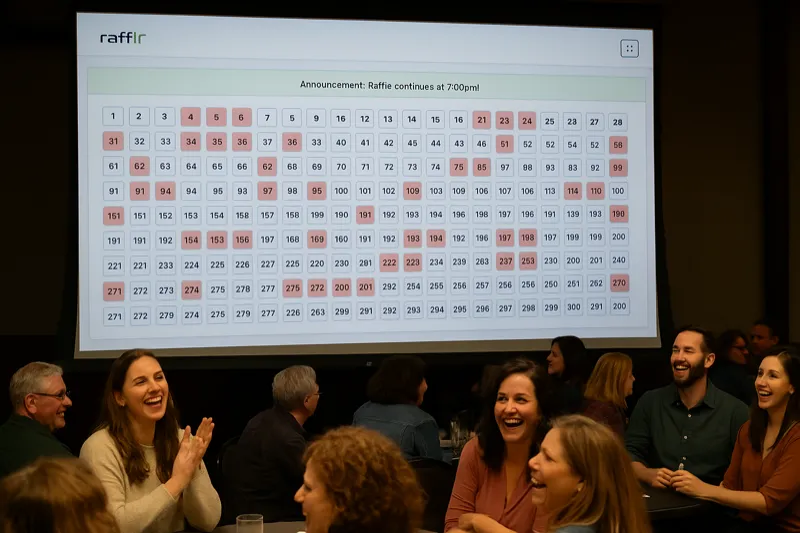
- Ticket grid visualization: Audience can see all tickets and watch them being eliminated in real time
- Auto-pull: Timed automatic draws with configurable speed, allowing the emcee to focus on entertaining
- Animations and sound: Built-in visual effects that create genuine excitement
- Reverse raffle support: Native support for the elimination format, not just standard draws
- Results tracking: Complete history of every draw, exportable for records
Best for: Live events, fundraisers, charity galas, and any raffle where audience experience matters.
Online Raffle Platforms
Platforms like RallyUp, Zeffy, and Rafflecopter focus on online ticket sales and fundraising. They handle the selling side but typically offer minimal draw presentation features.
Best for: Organizations that primarily sell tickets online and do not need a live drawing experience. Many organizations use an online platform for ticket sales combined with rafflr for the actual draw.
Making Your Raffle Draw Exciting
The draw is the climax of your event. Making it exciting is not just about entertainment -- it directly impacts future ticket sales, donation willingness, and overall event satisfaction. Here is how to maximize the energy in the room.
Choose the Right Format for Your Audience
A standard raffle draw is over quickly. That is fine for events where the raffle is a side activity. But if the drawing is the main event, a reverse raffle format creates far more sustained engagement. With a reverse raffle, every number drawn eliminates a participant, building tension as the field narrows. The last ticket standing wins.
Use a Visible Display
Nothing kills excitement faster than an audience that cannot see what is happening. Project your drawing software on a large screen, use a stage with good lighting, and position the display where every table in the room has a clear line of sight.
Add Commentary and Narration
A good emcee transforms a mechanical draw into theater. They can call out how many tickets remain, identify table numbers being eliminated, announce when big donors lose their tickets, and build anticipation as the field narrows.
Build in Side Bets and Bonus Rounds
Many organizations add side pots or consolation prizes during the draw. For example, every 50th ticket eliminated might win a small prize. This keeps eliminated participants engaged and adds additional fundraising opportunities.
Leverage Auto-Pull for Pacing
With digital tools that offer auto-pull functionality, you can set the draw speed to match the mood of the room. Start fast to build momentum, slow down as the field narrows, and let the final few draws happen one at a time with maximum suspense.
Legal Considerations for Raffle Draws
Raffle draws are regulated in most jurisdictions. While the specifics vary by state and country, there are common requirements to be aware of:
- Permits and licenses: Most states require a raffle license or permit, especially for prizes over a certain value.
- Eligible organizations: Many jurisdictions limit raffle operation to registered nonprofits or charitable organizations.
- Reporting requirements: Prizes above certain thresholds may need to be reported to tax authorities. Winners may receive a 1099 form.
- Alternative method of entry: Some jurisdictions require a free method of entry in addition to purchased tickets.
- Record retention: Many states require that raffle records be kept for a specified period after the draw.
Digital raffle draw tools make compliance easier by automatically maintaining records of every ticket sold and every number drawn. For state-specific requirements, consult your local regulations or refer to our raffle laws guide.
Why rafflr Is the Best Raffle Draw App for Live Events
rafflr was built from the ground up for one purpose: making live raffle draws unforgettable. While other platforms focus on ticket sales or general fundraising, rafflr is laser-focused on the drawing experience. Here is what sets it apart.
- Full-screen presenter mode designed for projection on any size screen. Numbers are large, colors are high-contrast, and animations are smooth.
- Responsive ticket grid for up to 1,000 tickets. Large TVs and 1080p projectors can show the full grid, while smaller laptop and mobile viewports scroll vertically for readability.
- Auto-pull with adjustable speed so you can match the pace to the energy of the room. Start fast, then slow down for dramatic effect.
- Built-in reverse raffle support with elimination tracking, side pot management, and last-ticket-standing detection.
- Server-saved drawing state with a reliable internet connection, so the operator and presenter remain synchronized.
- No audience downloads needed -- just project from one laptop and the entire room is engaged.
If you want to see these features in action, check out our review of the best raffle apps for a detailed comparison of what is available.
Common Raffle Draw Mistakes to Avoid
Even experienced event organizers make mistakes with raffle draws. Here are the most common ones and how to avoid them.
Not Testing the Technology
Running a digital draw for the first time in front of a live audience is risky. Always do a full rehearsal, including connecting to the projector, running through the draw sequence, and testing the sound system.
Drawing Too Slowly (or Too Fast)
A draw that takes too long loses the audience. A draw that happens too fast feels anticlimactic. For a standard raffle, the entire draw should take 5-10 minutes. For a reverse raffle, budget 60-90 minutes for 200-300 tickets, with breaks and side activities built in.
Forgetting to Exclude Unsold Tickets
If you have unsold ticket numbers in the draw pool, you risk drawing a number that nobody holds. This is awkward, wastes time, and undermines trust. Digital tools handle this automatically, but for manual draws, be meticulous about removing unsold stubs.
No Backup Plan
Technology can fail. Projector bulbs burn out, laptops freeze, and Wi-Fi drops. Always have a backup plan: a printed list of ticket numbers, a manual backup drawing method, or a second device ready to go.
Ignoring the Legal Requirements
Running a raffle draw without proper permits can result in fines and legal problems for your organization. Check your local and state regulations before selling a single ticket.
Frequently Asked Questions About Raffle Draws
What is the fairest way to conduct a raffle draw?
Use a secure, transparent drawing process that removes human choice from number selection and saves the results. Rafflr uses server-side cryptographic random selection and an audience-facing display. It is not independently certified, so high-stakes events should also retain exported results and use an independent observer.
Can I use an app for a raffle draw instead of pulling names from a hat?
Yes, raffle draw apps are widely used and generally preferred over manual methods. Apps provide true randomness, eliminate the possibility of human error or favoritism, and create a more engaging experience. Most raffle draw apps also keep a digital record of results, which is important for compliance and transparency.
How many tickets should I sell before doing a raffle draw?
There is no minimum number of tickets required for a raffle draw. However, most successful raffles sell between 100 and 500 tickets. The key is ensuring your ticket sales cover the cost of prizes and generate a meaningful profit for your cause.
What is the difference between a raffle draw and a lottery?
A raffle draw is a private drawing conducted by an organization where participants purchase tickets for a chance to win prizes. A lottery is a government-regulated game of chance. The main differences are legal oversight, who can operate them, and how proceeds are used.
How do I make a raffle draw more exciting for the audience?
Use a visual display that everyone can see, build suspense with timed reveals, add sound effects or music, narrate the drawing with an energetic host, and consider a reverse raffle format. Digital drawing tools like rafflr offer built-in animations and presenter modes designed specifically to maximize audience engagement.
When NOT to Use a Digital Draw
Digital raffle draw tools are the right choice for most events, but not every event. Here are situations where a manual or hybrid approach may serve you better:
- The physical act of drawing is part of the tradition -- some organizations have decades-old rituals around pulling tickets from a drum. Replacing that with software can feel wrong to long-time supporters.
- Your audience does not trust technology -- older demographics or first-time participants may be skeptical of digital randomness. In these cases, a physical draw with a visible container builds more confidence.
- You have fewer than 20 tickets -- for very small draws, pulling from a hat is simpler and just as effective. The overhead of setting up software is not justified.
- Regulations require physical ticket draws -- some jurisdictions mandate that raffle drawings use physical tickets. Always check your state raffle laws before choosing a method.
Start Running Better Raffle Draws Today
A great raffle draw is the difference between an event people forget and one they talk about for months. Whether you are drawing 50 tickets at a school carnival or 500 at a charity gala, the right approach and tools make all the difference. Stop pulling numbers from a hat and start giving your audience the professional, exciting, and verifiably fair drawing they deserve.