A well-organized raffle can raise thousands of dollars for your cause, but only if the planning starts weeks or months before the first ticket is sold. Whether you are organizing a raffle for a school fundraiser, nonprofit gala, or community event, this complete planning checklist walks you through every step from initial concept to the night before your drawing.
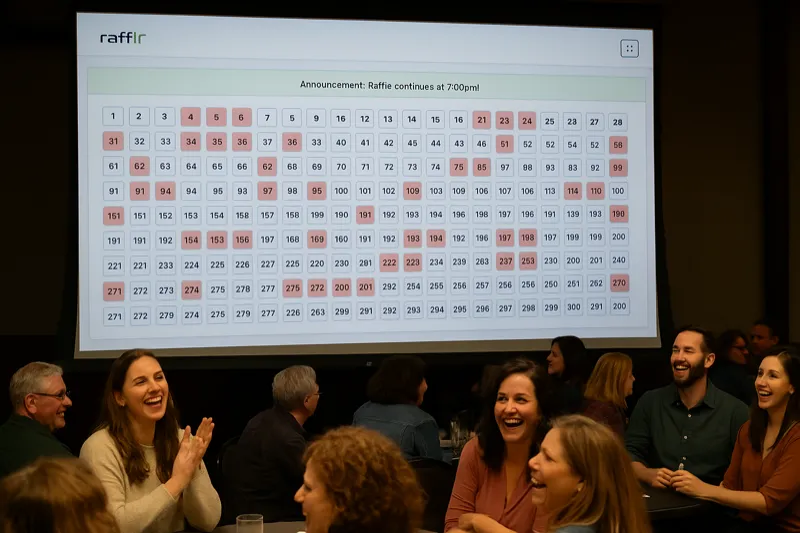
Raffle Planning Checklist at a Glance
| Phase | Tasks | Timeline | Notes |
|---|---|---|---|
| Foundation | Set fundraising goal, form committee, research laws, pick date | 8-12 weeks out | Apply for permits early -- some states take weeks |
| Prize Procurement | Build prize wishlist, solicit donations, set ticket pricing | 6-8 weeks out | Aim for 1 headline prize + 3-5 mid-tier + several small |
| Ticket and Promo Setup | Design tickets, create promo materials, distribute to sellers | 4-6 weeks out | Pre-sell 40-60% of tickets before event day |
| Active Promotion | Email blasts, social media, local media, word of mouth | 4-6 weeks out | Intensify messaging in final 2 weeks |
| Volunteer Coordination | Assign roles, brief team, establish communication channels | 4 weeks out | 5 key roles: sales, prizes, promo, event-day, finance |
| Final Preparation | Confirm ticket count, verify prizes, test equipment, brief team | Day before | Print run sheet with minute-by-minute schedule |
| Event Day | Sell remaining tickets, run drawing, announce winners | Day of | Have backup plan for tech failures |
| Follow-Up | Thank participants, deliver prizes, file reports, debrief | 1-2 weeks after | Document lessons for next event |
Start With a Planning Timeline
The biggest mistake first-time raffle organizers make is underestimating how much lead time they need. A simple raffle with a few prizes might come together in four weeks, but a large-scale event with hundreds of tickets and high-value prizes typically requires eight to twelve weeks of planning. Setting a realistic timeline at the outset keeps every other task on track.
8-12 Weeks Out: Foundation Phase
- Define your fundraising goal. Know the exact dollar amount you need to raise and work backward from there to determine ticket pricing and volume.
- Establish a planning committee. Recruit three to five reliable volunteers who can each own a specific area such as prizes, tickets, promotion, or logistics.
- Research local raffle laws. Many states and municipalities require permits or licenses for raffles, especially those offering prizes above a certain value. Contact your local clerk or attorney general office early.
- Set the date and format. Decide whether tickets will be sold over a period of weeks or only at a single event, and whether the drawing will be live or virtual.
6-8 Weeks Out: Prize Procurement
- Build a prize wishlist. Aim for a mix of one headline prize, three to five mid-tier prizes, and several smaller items. The headline prize is what drives ticket sales. Browse our raffle prize ideas for inspiration across every budget, or consider themed raffle basket ideas that boost perceived value.
- Solicit donations. Approach local businesses with a professional sponsorship letter explaining your cause, the expected audience, and the visibility they will receive in return.
- Set ticket pricing. Price tickets so that selling roughly 60-70 percent of your total inventory covers your fundraising goal. This gives you a comfortable margin. For a deeper dive, see our guide to ticket pricing strategies.
- Secure permits and insurance. File any required raffle permit applications and confirm your event insurance covers the raffle activity.
4-6 Weeks Out: Ticket and Promotion Setup
- Design and print tickets (or set up digital ticketing). Physical tickets should include your organization name, ticket number, price, drawing date, and prize descriptions.
- Create promotional materials. Prepare flyers, social media graphics, email templates, and any signage you will need at the venue.
- Distribute tickets to sellers. If volunteers or board members will sell tickets in advance, give each person a numbered batch and a tracking sheet.
- Launch your promotion campaign. Begin posting on social media, sending emails, and displaying flyers at strategic locations.
See rafflr in Action
Watch a 2-minute demo of how easy it is to create and run a reverse raffle with rafflr
Venue and Logistics Planning
Even if your raffle drawing happens as part of a larger event, the raffle itself has specific logistical needs that deserve careful attention. Getting these details right prevents confusion on event night and keeps the experience professional.
Venue Considerations
- Ticket sales area. Designate a clearly marked table or booth where guests can purchase tickets when they arrive. Position it near the entrance so no one walks past without seeing it.
- Drawing stage or area. If the drawing is live, you need a visible spot with a microphone where everyone in the room can see and hear the results.
- Prize display. Set up a table or display area where attendees can see the prizes before buying tickets. Themed gift baskets and bundled packages are especially eye-catching on display. Visual displays dramatically increase ticket sales.
- Payment processing. Plan for both cash and card payments. A mobile card reader or digital payment option eliminates the common excuse of not having cash on hand.
Supplies Checklist
Gather these items well before event day so nothing is left to last-minute scrambling:
- Tickets (physical or digital system ready)
- Cash box with starting change ($50-100 in small bills)
- Card reader or mobile payment device
- Drawing container (bowl, drum, or hat)
- Prize display materials (table, easel, signage)
- Seller tracking sheets and pens
- Winner notification forms and tax documentation if required
- Extension cords and power strips for any electronics
Ticket Strategy That Maximizes Sales
Your ticket strategy directly determines how much money you raise. The decisions you make about pricing, quantity, and sales channels during the planning phase have an outsized impact on results.
Pricing Models That Work
The most effective pricing approach depends on your audience and prize value. Consider these proven models:
- Single-price tickets: Simple and easy to manage. Works best for raffles with a single grand prize. Common price points are $5, $10, $25, $50, or $100 depending on the prize value.
- Bundle pricing: Offer discounts for buying multiple tickets, such as $10 each or three for $25. Bundles increase the average transaction value significantly.
- Tiered pricing: Different ticket levels for different prize pools. For example, $10 tickets enter the general drawing while $50 tickets enter both the general and premium prize drawing.
Determining Ticket Quantity
Limiting ticket quantity creates scarcity and urgency, which drives sales. Calculate your ideal number using this formula: divide your fundraising goal by your ticket price, then add 30-40 percent. If you need to raise $5,000 with $50 tickets, that is 100 tickets plus a buffer, so print 130-140 tickets. Advertising a limited supply of tickets motivates buyers to act quickly rather than waiting until the last minute.
Sales Channels
Do not rely on event-night sales alone. The most successful raffles sell 40-60 percent of their tickets before the event through these channels:
- In-person pre-sales at organization meetings, partner locations, and community events
- Online sales through your website, social media, or a dedicated raffle app that handles ticketing and payment. If you are new to selling tickets digitally, our online raffle guide covers the essentials.
- Volunteer seller networks where each committee member is responsible for selling a set number of tickets through their personal networks
- Corporate bulk sales to local businesses that want to support your cause and distribute tickets to employees
Promotion Planning
Even the best-organized raffle will fall flat without effective promotion. Your marketing plan should start four to six weeks before the drawing date and intensify as the event approaches.
Week-by-Week Promotion Schedule
- Weeks 4-6: Awareness. Announce the raffle, reveal the headline prize, and explain the cause. Focus on generating excitement and sharing through social media and email lists.
- Weeks 2-4: Urgency. Share ticket sales progress ("Only 75 tickets left!"), reveal additional prizes, and feature testimonials from past winners or beneficiaries of your cause.
- Final 2 weeks: Scarcity. Emphasize limited availability, share countdown posts, and make final pushes through personal outreach and text messages.
- Day of event: Last call. Promote on-site ticket availability and remind attendees about the drawing time.
Channels to Use
- Email: Send at least three emails -- announcement, mid-campaign update, and final reminder
- Social media: Post two to three times per week with prize photos, ticket sales updates, and cause-related content
- Local media: Submit press releases to community newspapers and local event calendars
- Word of mouth: Equip your volunteers with a short pitch they can use when talking to friends, family, and coworkers
- Physical signage: Post flyers at partner businesses, community boards, and your organization's location
Volunteer Coordination
Volunteers are the engine behind every successful raffle. Poor volunteer coordination is one of the most common reasons raffles underperform, because tasks get dropped or duplicated when roles are unclear.
Key Volunteer Roles
- Ticket Sales Lead: Manages pre-event and event-day ticket sales, tracks inventory, and reconciles money collected
- Prize Coordinator: Handles prize solicitation, collection, storage, display, and distribution to winners
- Promotions Lead: Manages social media, email campaigns, flyer distribution, and media outreach
- Event-Day Manager: Oversees setup, manages the drawing process, and handles any issues that arise
- Finance Tracker: Counts money, processes card payments, issues receipts, and prepares the final financial report
Volunteer Communication Tips
Create a shared document or group chat where all volunteers can see the master timeline, task assignments, and progress updates. Hold brief weekly check-in calls starting six weeks out and switch to twice-weekly calls during the final two weeks. Clear communication prevents the last-minute scrambles that cause stress and mistakes.
Day-Before Preparation Checklist
The day before your raffle is your final chance to catch anything that slipped through the cracks. Use this checklist to confirm everything is ready:
- Confirm final ticket count. Know exactly how many tickets have been sold pre-event and how many remain for event-day sales.
- Verify all prizes are accounted for. Physically confirm every prize is in your possession, properly labeled, and ready for display.
- Test all equipment. Check the microphone, speakers, card reader, and any digital tools you plan to use for the drawing.
- Print the event-day run sheet. Create a minute-by-minute schedule that includes setup time, ticket sales start, drawing time, and cleanup.
- Brief all volunteers. Send a final message confirming arrival times, parking instructions, assigned roles, and emergency contact information.
- Prepare the drawing materials. If using physical tickets, place all pre-sold ticket stubs in the drawing container. If using digital tools, confirm your software is set up and tested.
- Pack a supplies kit. Include tape, scissors, markers, extra pens, a stapler, blank paper, and a first-aid kit. These small items are always needed and rarely remembered.
- Charge all devices. Ensure phones, tablets, laptops, and card readers are fully charged and bring backup chargers.
Legal Requirements You Cannot Skip
Raffle regulations vary widely by state and locality, and ignoring them can result in fines or the forced cancellation of your event. Address these legal requirements during the early planning phase rather than as an afterthought.
- Permits and licenses. Most states require a raffle license for any organization conducting a raffle, even nonprofits. Application timelines vary from same-day to several weeks. Use a raffle rules template to make sure you cover every legal requirement.
- Eligible organizations. Some jurisdictions limit raffle permits to registered nonprofits, religious organizations, or specific civic groups. Verify your organization qualifies.
- Prize value limits. Certain states cap the maximum value of prizes that can be offered in a raffle. Check your local regulations before committing to high-value prizes.
- Reporting requirements. Many states require post-event reporting of total revenue, expenses, and prize distributions. Plan to collect this data as you go rather than reconstructing it afterward.
- Tax obligations. Prizes above $600 in value generally require IRS reporting. Have W-9 forms and 1099 procedures ready for high-value prize winners.
Common Raffle Planning Mistakes
Even experienced organizers fall into these traps. Knowing what to watch for helps you avoid the most common reasons raffles underperform.
- Underestimating volunteer needs. A raffle with 200 tickets and multiple prize tiers requires more hands than most organizers expect. Plan for at least five dedicated volunteers, each owning a specific area. When volunteers are stretched too thin, ticket sales drop and event-day logistics suffer.
- Not checking legal requirements early enough. Some states require permit applications weeks before the event. Discovering this two days before your raffle means canceling or risking fines. Review your state's raffle laws during the first week of planning, not the last.
- Overpricing tickets for the audience. A $100 ticket might work at a black-tie gala, but it will kill sales at a school fun run. Match your ticket price to what your audience can comfortably spend, and offer bundle discounts to increase average transaction size without raising the entry point.
- No contingency plan. What happens if your emcee cancels? If the projector fails? If half the expected attendees do not show up? Having a backup plan for the three or four most likely problems turns potential disasters into minor inconveniences. Test all technology the day before, have a backup device loaded with your raffle draw software, and designate an alternate emcee.
Bringing It All Together
Organizing a raffle is project management in miniature. The organizations that consistently run successful raffles treat the planning phase with the same seriousness as the event itself. They start early, assign clear ownership of every task, communicate frequently, and leave nothing to chance on event day.
The checklist approach works because it transforms an overwhelming project into manageable weekly tasks. Print out the timeline and checklists from this guide, assign each section to a volunteer lead, and check items off as they are completed. When event night arrives, you will be able to focus on engaging with your guests and building excitement for the drawing rather than scrambling to solve problems that should have been handled weeks ago.
Your next raffle does not have to be stressful. With the right planning, clear volunteer roles, and a structured promotion timeline, you can raise more money while actually enjoying the event you worked so hard to create.
Ready to organize your next raffle with professional software that handles ticketing, drawing, and presentation?
Get Started Today Watch Demo