Running a raffle online opens up your fundraiser to supporters who can not attend in person, makes ticket sales effortless, and removes the headache of paper tickets and manual drawings. Whether you are raising money for a school, church, sports team, or nonprofit, this guide walks you through every step of how to do a raffle online -- from understanding the legal requirements to promoting ticket sales and conducting a transparent drawing.
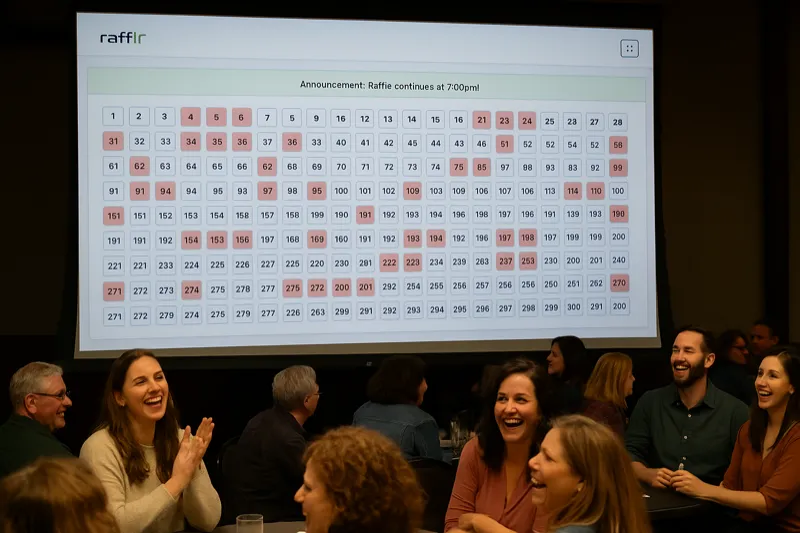
Online Raffle Setup at a Glance
| Step | What to Do | Time Needed | Tools |
|---|---|---|---|
| 1 | Define goal and budget | 1-2 hours | Spreadsheet, calculator |
| 2 | Check state raffle laws | 1-3 hours | State law guide |
| 3 | Choose raffle format | 30 minutes | Format comparison chart |
| 4 | Select raffle software | 1-2 hours | Software reviews |
| 5 | Set ticket pricing and limits | 1 hour | Pricing calculator |
| 6 | Secure prizes | 1-4 weeks | Donation request letters |
| 7 | Create raffle listing | 2-4 hours | Raffle platform, photos |
| 8 | Promote and sell tickets | 2-4 weeks | Email, social media, website |
| 9 | Run the drawing | 15-60 minutes | Raffle software, livestream |
| 10 | Follow up and report | 1-2 days | Email platform, tax forms |
Online raffles have exploded in popularity since 2020, and for good reason. They eliminate geographic barriers, simplify payment collection, and let you reach hundreds (or thousands) of potential ticket buyers through email and social media. But doing a raffle online is not as simple as posting a link and hoping for the best. There are legal considerations, software decisions, pricing strategies, and promotional tactics that separate successful online raffles from ones that fall flat.
This guide gives you a clear, step-by-step process for running an online raffle that actually hits your fundraising goals. If you want a broader overview of digital fundraising options, check out our complete online raffle guide. For the detailed how-to, keep reading.
Can You Legally Run an Online Raffle?
Before you set up a single thing, you need to understand the legal landscape. Raffle laws vary significantly from state to state, and running an online raffle adds another layer of complexity because your participants may be located in multiple jurisdictions.
Here is what you need to know at a high level:
- Most states require nonprofit status. In the majority of U.S. states, only registered 501(c)(3) nonprofits or other qualifying organizations (churches, schools, fraternal organizations) can legally run paid-entry raffles.
- Licensing and registration may be required. Many states require you to obtain a raffle license or gaming permit before selling tickets. This often involves a small fee and a short application process.
- Some states prohibit online ticket sales. Even states that allow raffles may have restrictions on selling tickets online or across state lines. Alabama, Hawaii, and Utah, for example, prohibit most forms of raffle activity.
- Reporting and record-keeping are mandatory. Most states require you to keep detailed records of ticket sales, expenses, and prize distributions. Some require post-event financial filings.
- Tax implications exist for winners. Prizes valued over $600 must be reported to the IRS. Winners may owe income tax on their winnings, and your organization may need to issue a 1099 form.
The bottom line: do not skip this step. Our state-by-state online raffle laws guide breaks down the specific requirements for each state. Review it before you move forward, and when in doubt, consult a local attorney.
10 Steps to Run an Online Raffle
Whether this is your first online raffle or your tenth, following a structured process ensures nothing falls through the cracks. Here are the ten steps to do a raffle online successfully.
Step 1: Define Your Goal and Budget
Every successful online raffle starts with a clear fundraising target. Before you choose a platform, buy prizes, or design promotional materials, answer these questions:
- How much do you need to raise? Be specific. "As much as possible" is not a goal. A target of $5,000 or $20,000 gives you something to plan around.
- What is your budget? Factor in prize costs, platform fees, payment processing charges, marketing expenses, and any licensing fees.
- What is your timeline? Most online raffles run for two to four weeks. Shorter windows create urgency, but longer ones give you more time to promote.
- Who is your audience? Are you selling to existing supporters, or trying to reach new people? This affects your promotional strategy and ticket pricing.
A simple planning formula: if you want to raise $10,000 net and your expenses total $2,000, you need to sell $12,000 in tickets. At $50 per ticket, that means selling 240 tickets. Is that realistic for your audience? If not, adjust your pricing, prize strategy, or promotional plan.
Step 2: Check Your State's Online Raffle Laws
We covered this above, but it bears repeating as a formal step because it can derail your entire raffle if overlooked. Specifically, you need to verify:
- Whether your organization type qualifies to run a raffle in your state
- Whether online ticket sales are permitted
- Whether you need a license or permit (and how long the application takes)
- Any limits on ticket prices, total revenue, or prize values
- Whether you can sell tickets to people in other states
Apply for any required permits early. Some states process applications in a few days, while others take several weeks. You do not want to delay your raffle because of paperwork.
Step 3: Choose Your Raffle Format
Not all raffles work the same way. The format you choose affects your ticket pricing, participant experience, and the software you will need. Here are the three most common formats for online raffles:
Traditional Raffle: Participants buy numbered tickets. A winner is drawn at random from all tickets sold. This is the simplest format and what most people think of when they hear "raffle." It works well for large audiences and low-priced tickets ($5 to $25 each).
Reverse Raffle: All ticket numbers start in the pool, and numbers are drawn and eliminated one by one. The last number remaining wins the grand prize. Reverse raffles create sustained excitement and are especially popular for dinner events, galas, and live-streamed fundraisers. Tickets typically range from $50 to $500 each, making them ideal for higher-value prizes.
50/50 Raffle: Half of the total ticket revenue goes to the winner, and half goes to your organization. This format requires no prize procurement and is simple to run, but total revenue per participant tends to be lower because the prize is not predetermined.
Your choice depends on your audience, prize availability, and how much engagement you want to create. If you are not sure which format is right, our guide on how to organize a raffle covers the pros and cons of each in more detail.
Step 4: Select Raffle Software
The right software makes running an online raffle dramatically easier. At a minimum, your raffle platform should handle:
- Ticket sales and payment processing -- participants should be able to buy tickets and pay online in one step
- Random number generation -- a verifiably random drawing method that ensures fairness
- Participant management -- tracking who bought which tickets and their contact information
- Drawing presentation -- a way to display the drawing results, ideally live or in a shareable format
We will compare the top platforms later in this guide. The key point here is to choose your software before you start selling tickets, not after. Switching platforms mid-raffle creates confusion and can cost you sales.
Step 5: Set Ticket Pricing and Limits
Pricing your raffle tickets is both an art and a science. Price too high and you will struggle to sell enough tickets. Price too low and you will not hit your fundraising goal even if you sell out.
Here are some proven pricing guidelines:
- Traditional raffles: $5 to $25 per ticket with no purchase limit, or offer bundle deals (e.g., 1 ticket for $10, 3 for $25, 7 for $50)
- Reverse raffles: $50 to $500 per ticket with a fixed number of tickets (commonly 100 to 300)
- 50/50 raffles: $5 to $20 per ticket with unlimited purchases
A useful rule of thumb: your total potential ticket revenue should be three to five times the value of your prizes. This ensures you cover costs and still raise meaningful funds. For a deeper dive into pricing psychology and strategies, see our guide on how to price raffle tickets.
Step 6: Secure Prizes
Prizes are the engine of your raffle. Better prizes sell more tickets. Here is how to secure prizes that generate excitement without eating into your budget:
- Solicit donations from local businesses. Restaurants, retailers, and service providers are often willing to donate gift cards, products, or experiences in exchange for promotional exposure.
- Ask board members and supporters. Your inner circle may have connections to companies or products that would make great prizes.
- Consider experiential prizes. A weekend getaway, VIP event tickets, or a "dinner with the principal" can be more compelling than physical products and often cost less to provide.
- Create prize tiers. A grand prize, second prize, and third prize give more people a reason to participate. Reverse raffles often include "last few standing" consolation prizes as well.
- Purchase prizes strategically. If you must buy prizes, keep total prize costs under 20-30% of your expected ticket revenue.
Document every prize with its estimated fair market value. You will need this for your raffle listing, marketing materials, and post-event financial reporting.
Step 7: Create Your Raffle Listing
Your raffle listing is your sales page. It needs to convey trust, excitement, and urgency. Every effective raffle listing includes:
- A compelling headline that mentions the prize and the cause (e.g., "Win a $5,000 Travel Voucher -- Support Lincoln Elementary PTA")
- High-quality prize photos -- people want to see what they could win
- A clear explanation of the cause -- why should people buy a ticket? What will the funds support?
- Ticket pricing and purchase instructions -- make buying tickets as frictionless as possible
- Drawing date and time -- create a sense of urgency with a specific deadline
- Official rules -- eligibility requirements, odds disclosure, and prize delivery details (required in most states)
If your raffle software provides a built-in listing page, use it. If not, create a dedicated page on your website with a clear path to purchase tickets.
See rafflr in Action
Watch a 2-minute demo of how easy it is to create and run a reverse raffle with rafflr
Step 8: Promote and Sell Tickets
This is where most online raffles succeed or fail. Even the best prizes and the slickest software will not matter if nobody knows about your raffle. Build a promotional plan that covers multiple channels:
Email Marketing
- Send an announcement email to your entire supporter list
- Follow up with reminder emails at the halfway mark and 48 hours before the drawing
- Personalize messages when possible -- people respond better to "Hi Sarah" than "Dear Supporter"
- Include a direct link to purchase tickets in every email
Social Media
- Post about the raffle on all your organization's social channels
- Create shareable graphics featuring the prizes
- Use countdown posts as the drawing date approaches
- Ask board members, volunteers, and supporters to share with their networks
- Consider a small paid social media budget ($50 to $200) to expand reach
Website and In-Person
- Add a banner or popup on your organization's homepage
- Mention the raffle at every in-person event and meeting
- Print QR codes that link directly to the ticket purchase page
- Reach out to local media -- community newspapers and news sites often cover charitable raffles
The most effective promotional strategy combines urgency (limited tickets, countdown to drawing) with social proof (sharing how many tickets have sold, featuring early buyers). Update your audience regularly on progress toward your goal.
Step 9: Run the Drawing
The drawing is the climax of your raffle and the moment your participants have been waiting for. How you handle it matters for both transparency and engagement:
- Use your software's built-in drawing tool. Never draw winners manually or with a method that could be questioned. Software-generated random drawings are verifiable and tamper-proof.
- Live-stream the drawing if possible. Facebook Live, YouTube Live, or Zoom let participants watch in real time. This dramatically increases engagement and builds trust.
- Record the drawing. Even if you do not live-stream, record the process so you can share it afterward and have documentation if anyone questions the results.
- Announce the winner immediately. Post the results on social media, send an email to all participants, and contact the winner directly with instructions for claiming their prize.
For reverse raffles, the drawing itself is the entertainment. Numbers are eliminated one by one, building suspense over the course of the event. This format works especially well for live-streamed online events because the audience stays engaged throughout the entire drawing, not just at the moment the winner is announced.
Step 10: Follow Up and Report Results
The raffle does not end when you announce the winner. What you do after the drawing sets the stage for your next fundraiser:
- Thank everyone. Send a thank-you email to all participants, not just the winner. Let them know how much was raised and what the funds will support.
- Deliver prizes promptly. Ship or arrange pickup for prizes within a week of the drawing. Delays create a bad impression.
- Share results publicly. Post the total raised, the winner (with their permission), and photos of prize delivery on social media and your website.
- File required reports. Many states require post-raffle financial reports. Complete these on time to maintain your license and good standing.
- Issue tax documents. If any prize exceeds $600 in value, you may need to provide a 1099 form to the winner and report to the IRS.
- Debrief and document lessons learned. What worked? What did not? What would you change next time? This information is invaluable for future raffles.
Building a reputation for running well-organized, transparent online raffles is the best marketing you can do for your next event. Participants who have a good experience are far more likely to buy tickets again and tell their friends.
Best Online Raffle Software
Choosing the right platform is one of the most important decisions you will make. Here is a quick comparison of popular options for running an online raffle:
rafflr -- Purpose-built for reverse raffles. Offers professional drawing presentations with animated number elimination, real-time ticket tracking, and a presenter view designed for live events and live streams. Best for organizations running reverse raffles, dinner events, or galas where the drawing is the main attraction. To explore what the best raffle app options look like, see our detailed comparison.
RallyUp -- A general fundraising platform that supports traditional raffles, auctions, and crowdfunding. Good for organizations that want multiple fundraising tools in one place. Takes a percentage of funds raised.
Zeffy -- Positions itself as a free platform for nonprofits, funded by optional donor tips. Supports basic raffle functionality. The trade-off is less customization and reliance on donor generosity to cover platform costs.
RafflePress -- A WordPress plugin focused on giveaways and sweepstakes rather than paid-entry raffles. Best for businesses running promotional giveaways, not fundraising raffles.
TicketSpice -- An event ticketing platform that can be adapted for raffle ticket sales. Flexible and affordable but requires more manual setup for the drawing process.
The right choice depends on your raffle format. If you are running a traditional raffle with low-priced tickets, a general platform works fine. If you are running a reverse raffle where the drawing experience matters, purpose-built software like rafflr delivers a significantly better participant experience.
Online Raffle vs. In-Person: Pros and Cons
Deciding between an online raffle and an in-person event is not always straightforward. Many organizations now run hybrid raffles that combine both. Here is how they compare:
Advantages of Online Raffles
- Broader reach. Sell tickets to supporters across the country, not just those who can attend an event.
- Lower overhead. No venue rental, catering, or printed materials needed.
- Easier payment collection. Credit card payments processed instantly -- no chasing down cash or checks.
- Better data. Digital platforms automatically track buyer information, ticket sales trends, and revenue in real time.
- Convenience. Participants can buy tickets from their phone at any time during the sales window.
Advantages of In-Person Raffles
- Higher ticket prices. People at a dinner or gala are often willing to spend more because the raffle is part of a larger experience.
- Stronger emotional connection. Being physically present at an event creates excitement that is hard to replicate online.
- Impulse buying. Seeing other people buy tickets and the energy in the room drives additional sales.
- Simpler legal requirements. Some states have fewer restrictions on in-person raffles compared to online ones.
The Hybrid Approach
Many organizations get the best of both worlds by selling tickets online leading up to an in-person event, then running the drawing live at the event (and streaming it online for remote participants). This maximizes both reach and engagement.
Common Online Raffle Mistakes
After working with hundreds of organizations running online raffles, these are the mistakes we see most frequently:
1. Skipping the legal research. This is the biggest and most dangerous mistake. Running an unlicensed raffle or violating state gambling laws can result in fines, loss of nonprofit status, and legal action. Always verify compliance first.
2. Setting ticket prices too low. It is tempting to price tickets low to maximize participation, but selling 1,000 tickets at $5 each is much harder than selling 100 tickets at $50 each. Your audience's willingness to pay is usually higher than you think, especially when the prize is compelling.
3. Under-promoting the raffle. One social media post and a single email blast is not a promotional plan. Successful online raffles require consistent promotion across multiple channels over the entire sales window. Plan for at least five to seven touchpoints with your audience.
4. Choosing prizes nobody wants. The most common prize mistake is choosing what is convenient rather than what is desirable. Cash, travel experiences, and high-demand electronics consistently outperform random donated items.
5. Making ticket purchase too complicated. Every extra step between "I want to buy a ticket" and "my ticket is confirmed" costs you sales. If your purchase process requires creating an account, filling out a long form, or navigating a confusing website, you will lose buyers. Keep it to three clicks or fewer.
6. Not setting a clear deadline. Open-ended raffles with no firm drawing date create no urgency. Set a specific drawing date and communicate it everywhere. Use countdown messaging in the final 48 hours to drive last-minute sales.
7. Failing to follow up after the event. Not thanking participants, delaying prize delivery, or failing to share results undermines trust and makes it harder to run your next raffle. The follow-up is just as important as the event itself.
Frequently Asked Questions
Is it legal to do a raffle online?
Online raffle legality varies by state. Most states allow nonprofits to run online raffles with proper licensing, but some states prohibit them entirely. Always check your state's specific gambling and raffle laws before starting. Our online raffle laws guide covers every state.
How much does it cost to run an online raffle?
Costs vary depending on the platform. Some raffle software charges monthly fees ranging from $20 to $100+, while others take a percentage of ticket sales (typically 5-10%). Factor in prize costs, payment processing fees (usually 2.9% + $0.30 per transaction), and any state licensing fees.
What is the best software for running an online raffle?
The best software depends on the workflow. Rafflr provides the numbered draw and presenter board for a reverse raffle after the organizer has handled ticket distribution through approved channels. Organizations needing online ticket sales, participant payments, or donor management should choose a platform built for those functions.
How many tickets should I sell for an online raffle?
The number of tickets depends on your fundraising goal and prize value. A common formula is to set total ticket revenue at three to five times your prize cost. For example, if your prize costs $500, aim to sell $1,500 to $2,500 in tickets. For reverse raffles, 100 to 300 tickets is the typical range.
Can I run an online raffle for a for-profit business?
In most states, raffles where participants pay for a chance to win a prize are classified as lotteries and restricted to licensed nonprofits. For-profit businesses can run sweepstakes (free entry) or contests (skill-based), but paid-entry raffles generally require nonprofit status. Consult a local attorney for guidance specific to your state.
When Running a Raffle Online Isn't Worth It
Online raffles are powerful, but they are not the right fit for every situation. Being honest about when to skip the online format saves you time, money, and frustration.
- Your audience prefers in-person events. Some communities, particularly older demographics or tight-knit local groups, respond better to a physical raffle at a dinner or meeting. If your supporters do not check email or use social media regularly, an online raffle will underperform compared to selling tickets at the door.
- Your state restricts online ticket sales. Several states prohibit or heavily restrict online raffle ticket sales. If your state falls into this category, running an online raffle creates legal risk that is not worth the convenience. Check the state-by-state raffle laws guide before committing to an online format.
- Your group is under 20 people. For very small groups -- a team of 15, a club with a dozen members -- the overhead of setting up an online raffle platform, creating a listing, and promoting it digitally is disproportionate to the outcome. A simple in-person drawing with physical tickets takes five minutes and achieves the same result.
- You lack the bandwidth to promote it. An online raffle without promotion is a listing that nobody sees. If your organization cannot commit to at least two weeks of consistent email and social media outreach, the raffle will likely fall short of its goal.
The best raffle organizers match the format to the audience. Sometimes that means going online, sometimes it means keeping things in person, and sometimes a hybrid approach works best.
Ready to Run Your Online Raffle?
Join hundreds of organizations running successful reverse raffles with professional software.
Get Started with rafflr30-day refund policy on all plans