The shift from paper to digital is transforming how organizations run raffles. A digital raffle replaces physical tickets, manual drawings, and paper-based tracking with software-driven tools that are faster, fairer, and more engaging. Whether you are considering going fully digital or just want to upgrade one part of your raffle workflow, this guide explains what a digital raffle is, how it works, and how to implement one for your next event.
What Makes a Raffle "Digital"?
A digital raffle is any raffle that uses electronic tools to replace one or more of the traditional paper-based processes. The term is broad and can refer to different levels of digitization:
- Digital ticket sales: Selling raffle entries online through a website, app, or payment platform instead of using physical tear-off tickets
- Digital ticket management: Tracking sold tickets, buyer information, and payment status in a database or spreadsheet instead of a paper ledger
- Digital drawing: Using software to randomly select winners instead of pulling physical tickets from a container
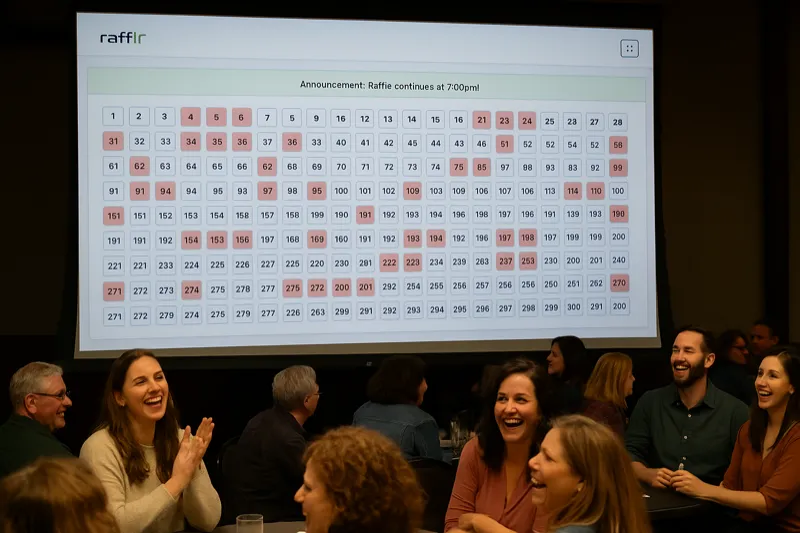
- Digital presentation: Displaying the draw on a screen with animations and visual effects instead of reading numbers from a clipboard
- Digital record-keeping: Automatically logging every aspect of the raffle for compliance, reporting, and future reference
A fully digital raffle eliminates paper at every stage. But many organizations take a hybrid approach -- selling physical tickets at the door while using digital tools for the drawing and tracking. Both approaches are valid, and the right choice depends on your audience and event format.
For a focused look at the ticket side of digital raffles, our guide to digital raffle tickets covers everything from QR-code tickets to mobile entry systems.
Digital Raffle vs. Physical Raffle: A Complete Comparison
Understanding the differences between digital and physical raffles helps you decide which approach (or combination) fits your event.
| Aspect | Physical Raffle | Digital Raffle |
|---|---|---|
| Tickets | Paper rolls, tear-offs, printed stubs | Online entries, QR codes, numbered assignments |
| Sales | In person, cash or check | Online, credit card, mobile payment |
| Tracking | Manual ledger, ticket stubs in a box | Automatic database with search and filter |
| Drawing | Pull from hat, drum, or cage | Software-generated random selection |
| Display | Announcer reads numbers | Projected screen with animations |
| Record-keeping | Manual documentation after the event | Automatic logging in real time |
| Setup time | Hours (printing, cutting, organizing) | Minutes |
| Scalability | Limited by physical materials | Handles any number of tickets |
| Environmental impact | Paper, ink, printing waste | Minimal |
The Components of a Digital Raffle
A complete digital raffle involves several components. You can digitize all of them or just the ones that matter most for your situation.
Digital Ticket Sales
Online ticket sales let participants buy raffle entries from anywhere, at any time. Platforms like RallyUp, Zeffy, and other fundraising tools handle payment processing, send confirmation emails, and track buyer information automatically.
The advantages are clear: wider reach (people do not need to be physically present to buy), automatic payment tracking, and elimination of cash handling. The trade-off is that some audiences -- particularly older demographics -- prefer buying tickets in person with cash.
For organizations that want to sell raffle tickets online, the key is choosing a platform that integrates smoothly with your drawing tool.
Digital Ticket Management
Even if you sell physical tickets, you can manage them digitally. This means maintaining a database or spreadsheet of ticket numbers, buyer names, and payment status. Digital management eliminates the risk of lost stubs, makes it easy to look up who owns any given ticket number, and simplifies end-of-event accounting.
Digital Drawing Tools
The digital drawing is often the most impactful upgrade. Instead of pulling tickets from a bowl, software randomly selects numbers using algorithms that are mathematically provable in their fairness. The best digital drawing tools add visual presentation -- projected grids, animations, and real-time elimination displays -- that transform the draw into entertainment.
rafflr is built specifically for this component. Its presenter mode displays a full-screen ticket grid that the audience watches as numbers are drawn and eliminated in real time. For organizations exploring different drawing options, our raffle ticket generator guide covers tools for creating and managing ticket numbers digitally.
See rafflr in Action
Watch a 2-minute demo of how easy it is to create and run a reverse raffle with rafflr
Digital Record-Keeping
Every digital raffle tool automatically maintains records that would take hours to compile manually. Draw history, ticket assignments, winner information, and financial summaries are all captured in real time and available for export whenever you need them.
This is particularly important for compliance. Many states require raffle organizers to maintain records for a specified period after the event. Digital tools make this effortless.
How to Run a Fully Digital Raffle
Here is a step-by-step workflow for running a raffle that is digital from start to finish.
Step 1: Choose Your Tools
You will need at minimum a ticket sales platform and a drawing tool. Many organizations use two separate tools that each excel at their specific function:
- For ticket sales: RallyUp, Zeffy, or a simple payment link (PayPal, Venmo, Square)
- For the drawing: rafflr (for live events) or the built-in drawing feature of your ticket sales platform (for online-only events)
Step 2: Set Up Online Sales
Create your raffle page on your chosen ticket sales platform. Include the prize description, ticket price, drawing date, and rules. Share the link through email, social media, and your website.
Step 3: Track Sales Digitally
As tickets sell, your platform tracks everything automatically. No manual counting, no lost stubs, no cash reconciliation headaches. You can check your sales dashboard at any time to see how many tickets have been sold and how much revenue has been generated.
Step 4: Import Ticket Data for the Drawing
When it is time for the draw, transfer your ticket range into your drawing tool. With rafflr, this is as simple as entering your start and end numbers. If you have unsold tickets, exclude those specific numbers.
Step 5: Run the Digital Draw
For a live event, connect to a projector and launch presenter mode. For an online draw, screen-share or livestream the drawing. The software handles the randomness -- you just set the pace and provide commentary.
Step 6: Document and Notify
The drawing tool automatically records the results. Send winner notifications through your ticket platform or manually. File your records as required by your local regulations.
The Hybrid Approach: Physical Tickets, Digital Drawing
The most popular approach is not fully digital or fully physical -- it is a hybrid. Many organizations sell physical tickets (which creates a tangible experience and works well for in-person events) but use digital software for the drawing.
This hybrid approach captures the best of both worlds:
- Participants get a physical ticket they can hold, display on their table, and track during the draw
- The drawing uses verified random selection instead of pulling from a hat
- The audience sees a professional digital display instead of someone reading numbers from a clipboard
- Records are automatically maintained for compliance
If you are running a live event like a dinner fundraiser or gala, the hybrid approach is often ideal. You keep the social experience of buying tickets at the door while upgrading the draw to be more fair, more exciting, and more professional.
Benefits of Going Digital
Organizations that switch to digital raffles consistently report improvements across several dimensions.
Fairness and Trust
Digital random number generators eliminate the physical biases inherent in manual draws. Tickets cannot stick together, settle at the bottom, or be affected by how they were folded. The randomness is algorithmic and verifiable, which builds trust with participants.
Audience Engagement
A projected digital draw with animations and visual effects is simply more engaging than someone reading numbers off a list. When every person in the room can see the ticket grid and watch numbers being eliminated in real time, the energy in the room increases dramatically.
Time Savings
No printing tickets, no cutting stubs, no counting cash, no manual record-keeping. Digital tools save hours of volunteer time before, during, and after the event.
Better Data
Digital raffles automatically capture data that physical raffles make difficult to track: who bought tickets, when they bought them, how they paid, which numbers they hold, and the complete draw history. This data is valuable for planning future events and understanding your donor base.
Environmental Impact
Eliminating paper tickets, printed stubs, and physical records reduces waste. For organizations that value sustainability, going digital aligns with that mission.
Challenges and How to Overcome Them
Audience Comfort with Technology
Some participants, particularly older demographics, may be unfamiliar with digital tools. The solution is to keep the audience-facing experience simple. With a tool like rafflr, the audience just watches a projected screen -- they do not need to download anything, create accounts, or interact with technology. The digital experience is entirely on the organizer's side.
Internet Reliability
Event venues do not always have reliable internet. This is why offline capability matters. rafflr works without internet once loaded -- the drawing runs entirely in the browser. Choose tools that do not require constant connectivity.
Trust in Digital Randomness
A small percentage of participants may trust a visible physical draw more than software. Address this by explaining how the random number generator works, displaying the draw publicly on a large screen, and maintaining complete records. Transparency overcomes skepticism.
Choosing Digital Raffle Software
When evaluating digital raffle software, prioritize these factors:
- What stage of the raffle does it handle? Sales, management, drawing, or all three?
- Does it work for live events? Presenter mode, projection support, and offline capability are essential for in-person events.
- How is the visual presentation? Can the audience see and follow the draw? Are there animations and visual effects?
- What formats does it support? Standard, reverse, 50/50, multi-prize?
- How is the record-keeping? Does it automatically log everything for compliance?
- What does it cost? Per-event pricing vs. annual subscription? Hidden fees?
For a detailed comparison of digital drawing tools specifically, our comprehensive online raffle guide reviews the top platforms and helps you match features to your requirements.
Frequently Asked Questions
What is a digital raffle?
A digital raffle is a raffle that uses electronic tools instead of physical materials for some or all of the raffle process. This can include digital ticket sales, digital ticket management, digital drawings, and digital record-keeping. A fully digital raffle eliminates paper entirely.
Are digital raffles legal?
Digital raffles are subject to the same legal requirements as traditional paper raffles. The digital format itself does not create additional legal issues, but online ticket sales may be subject to additional regulations depending on your jurisdiction. Always check your state and local laws.
Can I run a digital raffle at a live in-person event?
Absolutely. Many organizations sell physical tickets at the door but use digital software for the drawing. Tools like rafflr are specifically designed for this -- connect a laptop to a projector and the entire audience watches the digital draw on a big screen.
What equipment do I need for a digital raffle?
At minimum, use a laptop or tablet with a web browser and reliable internet. For live events, add a projector or large TV screen, and keep a phone hotspot available as a backup connection.
Is a digital raffle more fair than a traditional paper raffle?
Digital raffles use algorithmic random number generators that are mathematically provable in their fairness. Traditional paper draws are subject to physical biases. While both methods can produce fair results, digital draws eliminate the physical variables that can introduce unintentional bias.
When Paper Beats Digital
Digital raffles offer clear advantages in most scenarios, but there are legitimate situations where sticking with paper tickets is the better call.
- Tradition-focused audiences: Some events -- especially long-running annual fundraisers -- have attendees who look forward to the ritual of holding a physical ticket, watching a hand reach into a drum, and hearing numbers called aloud. Changing to digital can feel like losing a cherished tradition. If your audience resists the switch, forcing it risks lower attendance and satisfaction.
- Unreliable internet at the venue: Rural community centers, outdoor pavilions, and older church halls often have spotty or nonexistent Wi-Fi. While some raffle platforms work offline once loaded, the ticket sales and real-time features that make digital raffles shine depend on connectivity. If you cannot guarantee stable internet, paper is the safer bet.
- Physical tickets as keepsakes: For high-end charity galas, memorial fundraisers, or milestone anniversary events, a beautifully designed physical ticket becomes a memento. Attendees tuck them into scrapbooks or pin them on bulletin boards. A digital confirmation email does not carry the same sentimental weight. Our raffle ticket templates can help you create professional keepsake-quality designs.
The best organizers evaluate their specific audience and venue rather than assuming digital is always superior. When in doubt, the hybrid approach -- physical tickets at the event with a digital drawing on screen -- gives you the best of both worlds.
Make Your Next Raffle Digital
The digital raffle is not a future trend -- it is the current standard for organizations that want fair, engaging, and professionally run events. Whether you go fully digital or take the hybrid approach, upgrading even one part of your raffle workflow to digital tools will save time, improve the audience experience, and produce better results.