Rafflr vs RRaffle: Reverse Raffle Software Comparison
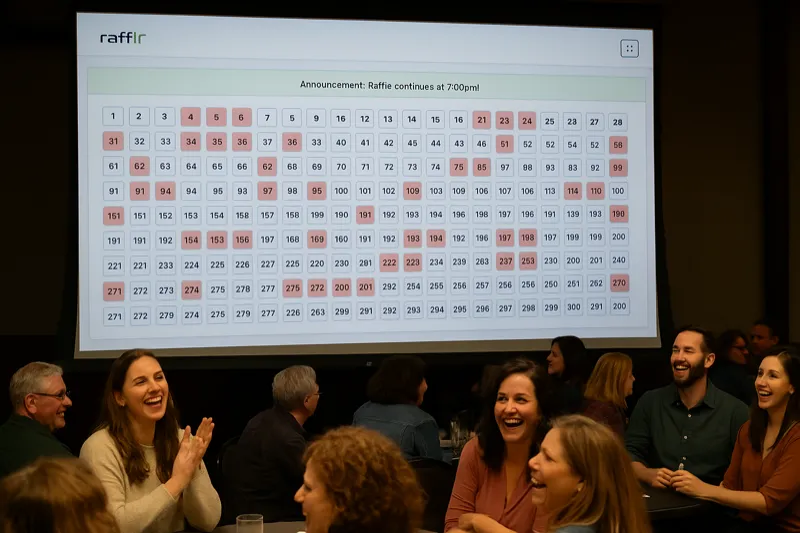
RRaffle is an established web-based reverse raffle app that has served club and organization fundraisers since 2011. rafflr is a modern reverse raffle software alternative built around a polished live presenter, quick setup, flexible pricing, sponsor visibility, auto-pull pacing, and buy-back support. This comparison is for organizations searching for a RRaffle alternative or deciding between rafflr vs RRaffle for a live draw event.
Web App vs Web App
The most important correction in any rafflr vs RRaffle comparison is that both products are web-based. RRaffle is not desktop software. It runs as an online reverse raffle app, and its own FAQ describes using a laptop and projector for a live event. rafflr also runs in the browser and works on any modern device with an internet connection.
That means the decision is not "desktop vs web." The real decision is pricing model, presenter workflow, feature access, ticket-sales needs, and how much event-night polish your team wants. RRaffle gives clubs an annual subscription model with a public raffle board and feature tiers. rafflr gives event organizers a simpler pricing menu: $77 for one event, $97 per year, or $497 lifetime, with the same core live-event workflow available without forcing an annual commitment.
Both platforms can handle the typical reverse raffle range. rafflr supports up to 1,000 tickets, while RRaffle publishes a 1 to 999 ticket-number range. That one-ticket difference is not a meaningful buying advantage, so compare pricing, workflow, presentation, and feature fit.
Feature Comparison at a Glance
| Feature | rafflr | RRaffle |
|---|---|---|
| Platform | Web-based reverse raffle software | Web-based reverse raffle app |
| Best fit | Live in-person reverse raffle events with a modern presenter board | Club-focused reverse raffle and raffle workflows |
| Pricing model | $77/event, $97/year, or $497 lifetime | $105, $155, or $250 per year |
| Pay-per-event option | ✓ $77 | ✗ Annual only |
| Lifetime option | ✓ $497 | ✗ |
| Ticket/number range | Up to 1,000 tickets | 1 to 999 ticket numbers |
| Capacity advantage | Effectively equivalent: rafflr supports 1,000 tickets and RRaffle publishes 1 to 999 ticket numbers. | |
| Reverse raffle mode | ✓ | ✓ |
| Live presenter board | ✓ Purpose-built for event-night display | ✓ Full-screen raffle board |
| Auto-pull | ✓ | Available on higher annual tiers |
| Sponsor visibility | ✓ Sponsor overlays during the event | Available on higher annual tiers |
| Buy-back workflow | ✓ Built for live reverse raffle pacing | Supports adding tickets back into the draw |
| Online raffle ticket sales | ✗ Ticket sales handled separately | Top tier only |
| Blog/resource library | ✓ Reverse raffle guides and planning resources | ✗ Thin public resource library |
| 30-day refund policy | ✓ | Not emphasized publicly |
See rafflr in Action
Watch a 2-minute demo of the live presenter board, drawing flow, and event-night controls
Section-by-Section Breakdown
A useful rafflr vs RRaffle comparison should look beyond a simple checklist. Both products can run a reverse raffle in a browser. Both are relevant to club and nonprofit fundraisers. The difference is how each platform handles the work around the draw: setup, presentation, pricing, feature access, ticket sales, and volunteer confidence.
Presenter and Audience Experience
The presenter screen is the part of the software your guests actually see. A reverse raffle is not just a random draw; it is a room-wide suspense format where each elimination changes the mood. rafflr is built around that live display, with a clean board, clear number states, sponsor overlays, and controls that help the operator keep the event moving. RRaffle provides a public raffle board as well, so this is not a category where RRaffle is absent. The difference is that rafflr puts the live presentation at the center of the product rather than treating it as one part of a broader raffle utility.
Feature Access and Tiers
RRaffle uses a tiered annual model. Its Basic, Professional, and The Works plans unlock different capabilities at $105, $155, and $250 per year. That can be familiar for buyers who are used to software subscriptions, but it creates a decision point before the event: which tier includes the features you actually need? rafflr's pricing is simpler for event teams. You choose the purchase duration, not a different event-night feature package: $77 for one event, $97 for the year, or $497 for lifetime access.
Ticket Sales Boundaries
RRaffle's top tier includes online raffle ticket sales. That is a real advantage if your organization wants ticket purchasing inside the same product. rafflr does not sell tickets online and should not be presented as an online ticket-sales platform. The cleaner way to think about rafflr is this: sell tickets through your existing process, then use rafflr to run the live reverse raffle draw professionally. For many dinner events, church fundraisers, and club drawdowns, tickets are already sold in person or through a separate process, so a focused drawing tool is enough.
Volunteer Setup and Training
Volunteer turnover is one of the most common risks in annual fundraising events. The person who ran last year's raffle may not be available this year, and the replacement may be learning the software on event day. rafflr's value is not only the price; it is the directness of the workflow. A volunteer should be able to understand the board, pull numbers, manage buy-backs, and keep the event moving without becoming a software administrator. RRaffle can also be operated by event volunteers, but its tier structure and broader feature set make it more important to know which plan and settings are in use.
Planning Support
Reverse raffle software is only one part of the fundraiser. Committees also need to think about prize structure, ticket pricing, sponsor packages, buy-back rules, display setup, and how the emcee will pace the night. rafflr's public resource library supports those surrounding decisions with guides on reverse raffles, last man standing events, drawdowns, raffle prizes, ticket templates, and pricing. RRaffle's public content is much thinner. If your organization already knows exactly how it wants to run the event, this may not matter. If your team is still planning, the surrounding guidance is useful.
Pricing Comparison
Pricing is the clearest reason many organizations look for a RRaffle alternative. RRaffle sells annual subscriptions only. That can be fine for clubs that run raffles throughout the year, but it is less efficient for an annual gala, booster dinner, church drawdown, or fire department reverse raffle where the software is needed for one big night.
| Use Case | rafflr | RRaffle | Practical Difference |
|---|---|---|---|
| One event per year | $77 per event | $105 annual minimum | rafflr is $28 lower and does not require an annual plan. |
| Repeat events | $97 per year | $105, $155, or $250 per year | rafflr's annual plan is lower than RRaffle's lowest annual tier. |
| Long-term organization use | $497 lifetime | Annual renewal every year | rafflr offers a one-time lifetime option for organizations that expect to reuse the tool. |
| Online raffle ticket sales | Use a separate ticket-sales process | $250/year top tier | RRaffle is the better fit if built-in online raffle ticket sales are required inside the same tool. |
For a one-night reverse raffle, the math is straightforward: rafflr's $77 event plan costs less than RRaffle's $105 annual minimum. For organizations that run several events, rafflr's $97 annual plan is also lower than RRaffle's lowest yearly plan. For organizations that repeat the same fundraiser every year, rafflr's $497 lifetime option removes the renewal question entirely.
That does not make RRaffle overpriced for every user. If your team wants one annual subscription, likes RRaffle's interface, and wants online raffle ticket sales through the top plan, RRaffle can make sense. The key is that you should not be forced into an annual model if your organization only needs reverse raffle software for one event.
Where RRaffle Has Strengths
Being fair about RRaffle matters. It is not a generic randomizer. It is a real reverse raffle app with a long operating history and a club-focused product shape.
Established Since 2011
RRaffle states that an early version has been used for a local athletic boosters reverse raffle since 2011. That history matters for clubs that prefer an established tool and want to know the product has been used in real fundraising settings for years.
Web-Based Raffle Board
RRaffle provides an online public raffle board and is designed for laptop-and-projector use at live events. If your organization is already comfortable running a raffle from a web app, RRaffle fits that basic workflow.
Online Raffle Ticket Sales on the Top Tier
RRaffle's $250/year The Works tier lists online raffle ticket sales. rafflr is intentionally focused on the draw and live presentation, not online ticket sales. If your primary requirement is selling raffle tickets online inside the same software, RRaffle's top tier deserves a closer look.
Simple Annual Subscription Model
Some organizations prefer annual software budgets. If your club renews tools once per year and does not want to choose between event, annual, and lifetime options, RRaffle's plan structure is easy to understand.
Where rafflr Excels
Flexible Pricing for Real Event Schedules
Many reverse raffles are annual events. A booster club, parish, fire department, or lodge may run one major fundraiser each year and have no reason to pay for a year of software. rafflr's $77 event plan is built for that reality. If the event grows into a recurring program, the $97 annual plan or $497 lifetime plan gives the same organization a path forward.
Modern Presenter Mode
rafflr is designed around the live room. The presenter board is the part your audience sees, so it needs to be clean, legible, and exciting on a projector or large display. rafflr's focus is the electronic drawdown board experience: clear numbers, smooth pulls, strong pacing, and an event flow that does not feel like someone is operating a back-office tool in public.
Auto-Pull for Dinner and Program Flow
Auto-pull matters when the drawing needs to keep moving while people eat, bid, socialize, or listen to speakers. Instead of asking a volunteer to click every number manually for hours, rafflr lets the event team set the pace and keep the room engaged. RRaffle offers auto-pull on higher annual tiers, while rafflr positions it as part of the core live-event toolkit.
Sponsor Overlays During the Event
Sponsors often pay for visibility. A logo in a printed program is useful, but a sponsor message on the live board can be more valuable because every guest is watching the screen. rafflr's sponsor overlays help organizations turn the drawing display into part of the sponsorship package.
Buy-Back Workflow
Reverse raffles often use buy-backs to create extra revenue and keep guests involved after their number is pulled. rafflr supports that event-night rhythm directly, so the team can re-enter numbers without losing control of the drawing. For organizations trying to maximize revenue from the room, buy-back support is not a side feature; it is part of the fundraiser.
Transparent UX and Planning Resources
rafflr's product positioning is direct: it is for live reverse raffle events. The site also includes planning resources for reverse raffles, drawdowns, last man standing raffles, pricing, prizes, tickets, and event setup. RRaffle's public site is much thinner as a resource library. If your volunteers need guidance as well as software, that difference matters.
The Ticket Capacity Question
Searchers often compare raffle tools by asking which one can handle more tickets. rafflr supports up to 1,000 tickets. RRaffle publishes a 1 to 999 ticket-number range and says its display looks best with three-digit numbers. The one-ticket difference is negligible; workflow and presenter quality are more useful comparison points.
If your event has 1 to 999 tickets, both products are in range. Rafflr also accepts ticket 1,000. The decision should still focus on pricing, feature access, presenter quality, event workflow, and whether you need built-in online ticket sales.
What rafflr Does Not Do
rafflr is intentionally focused. That makes the product easier to use at the event, but it also means it is not trying to be a complete fundraising suite.
- No built-in online raffle ticket sales. You handle ticket sales separately and use rafflr for the draw and live presentation.
- No donor CRM. rafflr is not a donor database or email marketing system.
- No offline mode. rafflr is web-based and requires an internet connection. RRaffle is also a web-based app, so plan for WiFi or a hotspot either way.
- No silent auction module. If your event needs auctions, use a separate auction tool or a broader event platform.
Decision Checklist
Use this checklist before choosing between rafflr and RRaffle. First, decide whether online raffle ticket sales must live inside the same product. If yes, RRaffle's top The Works tier is the relevant plan to evaluate. If ticket sales are already handled through paper tickets, an event registration page, a school office, a lodge committee, or another system, rafflr can stay focused on the live draw.
Second, decide how often the organization will use the software. For one annual fundraiser, rafflr's $77 event price keeps the cost low. For repeated raffles, rafflr's $97 annual plan is still below RRaffle's lowest annual tier. For a recurring event that will be handed from one committee to the next, the $497 lifetime option can remove future renewal friction.
Third, test the workflow with the person who will actually operate the board. The operator needs to pull numbers, pause, handle buy-backs, show sponsors, and recover calmly if the event pace changes. A comparison page can explain the differences, but the best final check is whether your volunteer can run the software confidently while the audience is watching.
Finally, keep the capacity question in the right place. A 1 to 999 number event fits both products, so do not let ticket count distract from the practical decision. The winning choice is the platform that matches your payment model, sales process, presenter expectations, and volunteer skill level.
Who Should Choose RRaffle
RRaffle may be the better choice if:
- You want an established web-based reverse raffle app with roots going back to 2011
- Your organization prefers annual subscriptions and does not need pay-per-event pricing
- You need online raffle ticket sales inside the same tool and are comfortable with the $250/year top tier
- Your team already uses RRaffle and the workflow is familiar
- Your event is simple enough that a thinner public resource library is not a concern
Who Should Choose rafflr
rafflr is the better fit if:
- You want a lower-cost one-event option at $77
- You want annual pricing at $97 or lifetime access at $497
- Your main priority is the live reverse raffle drawing, not online ticket sales
- You want a modern presenter board built for projectors and event screens
- You want auto-pull, sponsor overlays, and buy-back support as part of the event-night workflow
- You want a tool volunteers can understand quickly on any device with a browser
- You want a 30-day refund policy before committing long term
The Verdict
RRaffle is a legitimate, established reverse raffle app. It is web-based, club-oriented, and offers annual tiers from $105 to $250 per year. It is especially worth considering if the top-tier online raffle ticket sales feature is central to your event.
rafflr is the stronger RRaffle alternative for organizations that want a modern, focused live-event tool without annual-only pricing. It costs $77 for one event, $97 per year, or $497 lifetime, supports up to 1,000 tickets, and is built around the presenter experience that guests actually see during the fundraiser.
If your event is a dinner, gala, lodge fundraiser, church drawdown, booster reverse raffle, or fire department benefit, the best software is the one that keeps the drawing clear, exciting, and easy to run. That is where rafflr is intentionally focused.
Try the Modern RRaffle Alternative
Run your next reverse raffle with a purpose-built presenter board, flexible pricing, and a 30-day refund policy. Get started with rafflr today.
Frequently Asked Questions
Ready for a Modern Reverse Raffle Tool?
Flexible pricing. A polished presenter board. Built for live draw events.
Get Started with rafflr30-day refund policy on all plans