Everyone wants to know the secret to winning a raffle. The internet is full of "guaranteed" strategies and lucky-number theories, but most of them are nonsense. The truth is simpler, more mathematical, and honestly more useful than any superstition. Let's break down what actually affects your chances, what doesn't matter at all, and how smart raffle participants consistently put themselves in better positions to win.
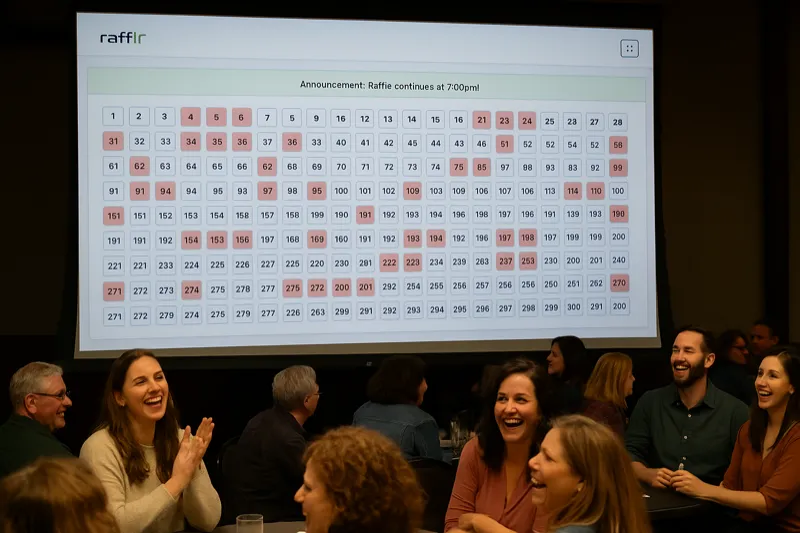
Raffle Odds at a Glance
| Raffle Type | Typical Odds (1 ticket) | Typical Ticket Price | Your Expected Value |
|---|---|---|---|
| Large public raffle (1,000 tickets) | 1 in 1,000 (0.1%) | $5-$25 | Negative -- you are supporting a cause, not investing |
| Community dinner raffle (200 tickets) | 1 in 200 (0.5%) | $10-$50 | Usually negative, but closer to breakeven |
| Reverse raffle (100-300 tickets) | 1 in 100-300 | $50-$500 | Varies -- consolation prizes improve EV |
| Small club raffle (50 tickets) | 1 in 50 (2%) | $5-$25 | Often positive when prizes are donated |
| 50/50 raffle (unlimited) | Depends on total sold | $5-$20 | Mathematically neutral (-50% per ticket) |
The Real Math Behind Raffle Odds
Before we talk strategy, let's talk probability. Raffle odds are refreshingly straightforward compared to most forms of chance. Your probability of winning is simply the number of tickets you hold divided by the total number of tickets sold.
Here's what that looks like in practice:
- 200 tickets sold, you buy 1: Your odds are 1 in 200 (0.5%)
- 200 tickets sold, you buy 5: Your odds are 5 in 200, or 1 in 40 (2.5%)
- 200 tickets sold, you buy 20: Your odds are 20 in 200, or 1 in 10 (10%)
- 50 tickets sold, you buy 5: Your odds are 5 in 50, or 1 in 10 (10%)
Notice something important in that last example? Buying 5 tickets in a 50-ticket raffle gives you the same odds as buying 20 tickets in a 200-ticket raffle. The total pool size matters just as much as how many tickets you buy. This is the single most important concept in raffle strategy, and it's the one most people overlook.
The Expected Value Question
Mathematicians use "expected value" to determine whether a bet is worth taking. Here's the formula: multiply the prize value by your probability of winning, then subtract the cost of your tickets.
For example, a raffle sells 100 tickets at $10 each for a $500 prize. If you buy one ticket, your expected value is ($500 x 1/100) - $10 = $5 - $10 = -$5. On pure math alone, you lose $5 on average. But change the scenario: only 30 tickets sell at $10 each for that same $500 prize. Now your expected value is ($500 x 1/30) - $10 = $16.67 - $10 = +$6.67. That's a positive expected value, meaning the odds are actually in your favor.
Of course, most raffle participants aren't purely motivated by expected value. The entertainment, the cause, and the thrill of potentially winning all carry their own value. But understanding the math helps you spot the best opportunities.
Myths That Cost People Money
Let's clear up some persistent raffle myths that refuse to die.
Myth: Lucky Numbers Win More Often
In a properly conducted raffle, every ticket number has an identical chance of being drawn. Ticket #7 is not luckier than ticket #143. The drawing method, whether it's a tumbler, a random number generator, or pulling from a hat, doesn't care about your lucky number. Spending extra time picking "good" ticket numbers is wasted effort.
Myth: Tickets at the Top or Bottom of the Pile Win More
This one has a tiny grain of truth in poorly run raffles where tickets aren't properly mixed. But any legitimate raffle uses thorough randomization. If you're worried about drawing fairness, look for events that use digital raffle systems with verified random number generation, which eliminates physical mixing bias entirely.
Myth: You Should Spread Tickets Across Multiple Raffles
This depends entirely on what you're trying to maximize. If you want the highest chance of winning something, then yes, spreading tickets across multiple raffles with fewer participants helps. But if there's one specific prize you want, concentrating your tickets in that single raffle gives you the best odds for that prize. There's no universal right answer here, it depends on your goals.
Myth: Past Results Predict Future Drawings
"That organization's raffle always picks tickets from the right side of the drum." No, it doesn't. Each drawing is independent. Past results in a random drawing have zero predictive power for future drawings. This is the gambler's fallacy, and it's just as wrong for raffles as it is for roulette.
See rafflr in Action
Watch a 2-minute demo of how easy it is to create and run a reverse raffle with rafflr
Smart Strategies That Actually Work
Now that we've cleared the myths, here's what frequent raffle winners actually do differently. None of these are "hacks." They're just logical approaches to probability.
1. Target Smaller Raffles
This is the single most effective strategy. A raffle with 50 participants gives you 20x better odds per ticket than a raffle with 1,000 participants. Frequent winners consistently seek out events with smaller crowds. Community fundraisers, local charity dinners, and club events typically have much smaller ticket pools than large public raffles.
2. Buy Tickets in Bulk (When the Math Works)
Many raffles offer bulk discounts: 1 ticket for $5 or 5 for $20. That fifth ticket is essentially free. If you're going to participate anyway, buying the bundle is almost always the better play. Just make sure the prize value justifies the total spend.
3. Arrive Early or Stay Late
At live events, ticket sales often happen throughout the evening. Arriving early lets you gauge how many people are buying and how many tickets are in play. Some events also sell additional tickets later in the evening when the crowd thins, which can mean a smaller final pool if early buyers leave before the drawing.
4. Look for Positive Expected Value
Keep an eye out for raffles where the prize value significantly exceeds the total ticket revenue, which happens more often than you'd think. Donated prizes, sponsored grand prizes, and charity events where organizers add value beyond ticket sales all create situations where the math tilts toward participants.
5. Understand the Raffle Type
Different raffle formats offer dramatically different experiences and odds. Understanding the types of raffles available helps you make smarter decisions. In a standard raffle, one ticket is drawn and that's it. In a reverse raffle, tickets are eliminated one by one until a single winner remains, creating extended suspense. In a split-the-pot raffle, the prize grows with ticket sales, so larger crowds mean bigger prizes but worse odds. Knowing the format helps you decide where your money goes furthest.
Different Raffle Types and Their Odds
Standard Single-Draw Raffles
The simplest format. One ticket drawn, one winner. Your odds are exactly tickets-held divided by tickets-sold. These are the easiest to calculate and the most straightforward to strategize around.
Multiple-Prize Raffles
When a raffle draws multiple winners, your odds of winning something improve significantly. In a 200-ticket raffle with 10 prizes, buying 5 tickets gives you roughly a 22.6% chance of winning at least one prize, compared to 2.5% in a single-prize raffle. The math gets slightly more complex (it's a hypergeometric distribution, if you're curious), but the takeaway is simple: more prizes means better odds per ticket.
Reverse Raffles
In a reverse raffle, every ticket is drawn, but instead of winning, drawn tickets are eliminated. The last ticket remaining wins the grand prize. Your odds of being the final ticket are identical to a standard raffle (1 in total tickets), but the experience is completely different. The tension builds with every draw, and many reverse raffles offer consolation prizes or buyout opportunities along the way, creating additional chances to walk away with something.
Split-the-Pot (50/50) Raffles
Also known as 50/50 raffles, half the ticket revenue goes to the winner, half to the organization. The unique dynamic here is that the prize grows as more tickets sell. Your odds decrease with each additional ticket sold, but the prize increases proportionally. The expected value per ticket actually stays constant regardless of how many tickets sell, which makes these raffles mathematically neutral from a strategy standpoint.
Tips from Frequent Winners
We've talked to dozens of people who seem to win raffles more than their fair share. Here's what they have in common:
- They participate often. This is the biggest factor. Someone who enters 50 raffles a year has far more chances than someone who enters 2. It's not luck. It's volume.
- They favor local events. Smaller venues, community organizations, and local fundraisers consistently have smaller ticket pools. One frequent winner told us she specifically seeks out events with fewer than 100 attendees.
- They set a budget and stick to it. Smart raffle participants treat ticket purchases as entertainment spending, not investment spending. They decide in advance what they're willing to spend and don't chase losses.
- They read the rules carefully. Some raffles have secondary drawings, early-bird bonuses, or attendance requirements. Frequent winners know the rules cold and take advantage of every opportunity the format provides.
- They support causes they care about. This might sound soft, but it's practical. When you're happy to support the organization regardless of whether you win, every ticket feels like money well spent. That mindset lets you participate more consistently without frustration.
What Organizers Can Learn from This
If you're on the other side of the table, running a raffle rather than entering one, understanding how participants think helps you design better events. Savvy participants look for good odds and fair drawings. Using a professional raffle app with transparent, verifiable random selection builds trust and encourages repeat participation. When attendees believe the drawing is genuinely fair, they buy more tickets.
Multiple prize tiers, reasonable ticket prices, and clear communication about odds all contribute to higher ticket sales. The best-run raffles make participants feel good about buying tickets regardless of the outcome.
The Honest Truth About Raffle Odds
Before you spend another dollar on raffle tickets, here are some things most "how to win" guides will not tell you.
- You probably will not win. In a raffle with 200 tickets, buying 5 gives you a 2.5% chance -- meaning you will lose 97.5% of the time. That is not pessimism, it is math. The people who "always win" are usually participating in dozens of raffles per year and only talking about the ones where they got lucky.
- Buying more tickets has diminishing returns. Going from 1 ticket to 5 tickets in a 200-ticket raffle increases your odds from 0.5% to 2.5% -- a 5x improvement. But going from 5 to 10 tickets only doubles your odds from 2.5% to 5%. Each additional ticket costs the same but adds less incremental probability. At some point, you are spending significantly more for a marginal improvement.
- Raffles are fundraisers, not investments. The expected value of most raffle tickets is negative. The organizers need to raise more money than they give away in prizes -- that is the entire point. If you are buying tickets hoping to come out ahead financially, you are approaching raffles the wrong way. Buy tickets because you want to support the cause and enjoy the experience. Any prize is a bonus.
Understanding this does not mean you should stop entering raffles. It means you should enter with clear eyes, a set budget, and the right expectations. The smartest raffle participants are the ones who enjoy the process regardless of the outcome.
The Honest Bottom Line
There is no magic trick to winning a raffle. Anyone who tells you otherwise is selling something. But there are genuinely smarter ways to participate: target smaller raffles, understand the math, buy bundles when they're offered, and participate consistently over time. The "frequent winners" you hear about aren't lucky. They're playing a volume game with good target selection.
Most importantly, approach raffles as what they are: a fun way to support a cause you believe in, with a shot at winning something great. When you frame it that way, you win something every time you buy a ticket. The actual prize is just a bonus.
Ready to run a professional, transparent raffle that your participants will love?
Get Started Today