If you have ever searched for "drawdown fundraiser" and landed on pages about reverse raffles, or vice versa, you are not alone. These two terms describe the exact same event, and the confusion is entirely regional. Whether you call it a drawdown or a reverse raffle, you are talking about one of the most effective and exciting fundraising formats in the country.
What Is a Drawdown?
A drawdown is a fundraising event where a limited number of tickets are sold at a premium price, usually between $50 and $150 each. Each ticket has a unique number. During the event, numbers are drawn and eliminated one at a time. Unlike a traditional raffle where the first number drawn wins, a drawdown works in reverse: the last number remaining wins the grand prize.
The term "drawdown" comes from the idea of drawing numbers down from the full set until only one remains. It is deeply embedded in the culture of the Gulf South, particularly in Mississippi, Louisiana, and Texas, where drawdowns are a staple fundraiser for Catholic schools, parish churches, American Legion posts, and community organizations.
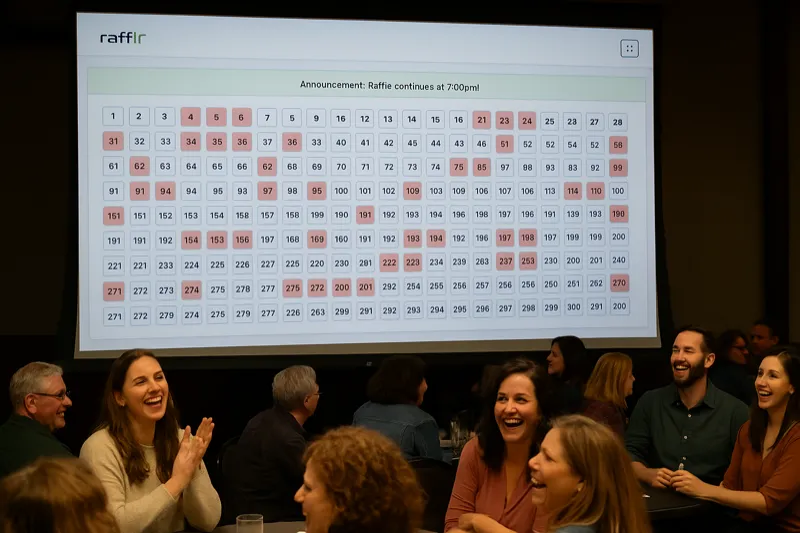
A typical drawdown event includes dinner, drinks, socializing, and the main event: watching the drawdown board as numbers are eliminated. Many organizations pair their drawdown with silent auctions, side games, and additional prize drawings throughout the evening.
What Is a Reverse Raffle?
A reverse raffle is a fundraising event where numbered tickets are sold, numbers are drawn and eliminated one by one, and the last number standing wins the grand prize. Sound familiar? It should. A reverse raffle is exactly the same event as a drawdown.
The term "reverse raffle" emphasizes that the format is the opposite of a traditional raffle. In a regular raffle, the first number drawn is the winner. In a reverse raffle, the first numbers drawn are the losers, and the last number drawn is the winner. This reversal creates sustained drama and engagement that keeps every ticket holder invested until the very end.
Reverse raffles are enormously popular across Ohio, Pennsylvania, Michigan, New York, New Jersey, and throughout the Midwest and Northeast. Schools, churches, fire departments, and nonprofit organizations of all sizes use them as their primary annual fundraiser.
Are They the Same Thing?
Yes. A drawdown and a reverse raffle are 100% the same event. The rules are the same. The format is the same. The experience for attendees is the same. The only difference is the name, and that name depends entirely on where you live.
This is not a subtle distinction or a matter of opinion. Ask someone in Jackson, Mississippi to describe their annual drawdown, and they will describe an event identical to what someone in Cleveland, Ohio calls their annual reverse raffle. The tickets, the elimination process, the grand prize, the buy-back opportunities, the dinner and socializing, the dramatic final moments with the last few numbers remaining on the board -- all of it is the same.
"We moved from Baton Rouge to Columbus and were thrilled to find out they do reverse raffles here. Same event we loved back home, just a different name."
Where Is "Drawdown" Used?
The term "drawdown" is the dominant name in a specific geographic corridor:
- Mississippi -- Drawdowns are deeply rooted in Mississippi culture, particularly among Catholic schools and parishes. Jackson, Hattiesburg, Biloxi, and their surrounding communities host dozens of drawdowns every year.
- Louisiana -- Baton Rouge, New Orleans, Lafayette, and Shreveport all have thriving drawdown traditions. Louisiana parishes (the state's equivalent of counties) are known for large-scale drawdown events that can raise $50,000 or more.
- Texas -- Particularly in East Texas and areas with strong Catholic communities. Houston, Beaumont, and the Golden Triangle area use the term drawdown frequently.
- Parts of Alabama and Arkansas -- Communities near the Mississippi and Louisiana borders often use the drawdown terminology, though it becomes less common further from the Gulf South.
The drawdown tradition is especially strong in the Catholic school corridor of the Gulf South. Catholic schools in Mississippi and Louisiana have been running drawdowns for decades as their primary fundraising events, with some schools raising the majority of their annual discretionary budget through a single drawdown night.
See rafflr in Action
Watch a 2-minute demo of how easy it is to run a drawdown (or reverse raffle) with professional software
Where Is "Reverse Raffle" Used?
The term "reverse raffle" is used much more broadly across the United States:
- Ohio -- Perhaps the single biggest reverse raffle state in the country. Cleveland, Columbus, Cincinnati, and hundreds of smaller communities run reverse raffles constantly.
- Pennsylvania -- Pittsburgh and its surrounding communities have a deep reverse raffle tradition, particularly among Catholic schools and fire departments.
- Michigan, Indiana, Illinois -- Throughout the Midwest, "reverse raffle" is the standard term.
- New York, New Jersey, Connecticut -- The Northeast uses "reverse raffle" almost exclusively.
- National usage -- When the concept appears in national media, fundraising guides, or software platforms, "reverse raffle" is the default term used.
Other Names for the Same Event
Drawdown and reverse raffle are the two most common names, but this event format goes by several other regional and descriptive names:
- Last man standing raffle -- A descriptive name that captures the elimination format perfectly. Used informally across many regions.
- Elimination raffle -- Another descriptive term that focuses on the process of eliminating numbers one at a time.
- Reverse drawing -- Sometimes used interchangeably with reverse raffle, particularly in formal event descriptions.
- Countdown raffle -- Emphasizes the countdown aspect as the number of remaining tickets decreases.
- Survivor raffle -- Borrows from the popular TV show concept where the last one standing wins.
- Chinese raffle -- An older term that is falling out of use but still appears occasionally in some communities.
Regardless of the name, all of these terms describe the same core format: sell numbered tickets, eliminate numbers one at a time, and the last number standing wins.
How Drawdowns and Reverse Raffles Work
Whether you call it a drawdown or a reverse raffle, the step-by-step process is identical:
- Sell tickets in advance. Organizations typically sell a limited number of tickets (200 to 500 is most common) at a premium price. Each ticket has a unique number.
- Host the event. Ticket holders gather for an evening that usually includes dinner, drinks, and socializing. The venue could be a church hall, school gymnasium, hotel ballroom, American Legion post, or any event space.
- Display the board. All ticket numbers are displayed on a board -- traditionally a physical board, but increasingly on an electronic drawdown board via projector or TV screen.
- Begin drawing numbers. Numbers are drawn at random. Each drawn number is eliminated from the board. In a traditional setup, ping-pong balls are drawn from a container. With electronic software, the computer generates random draws.
- Offer buy-backs. Many events allow eliminated ticket holders to "buy back" into the drawdown for an additional fee, creating extra revenue and keeping everyone engaged.
- Award consolation prizes. As the field narrows, many events award smaller prizes at milestones (last 50, last 25, last 10, last 5) to maintain excitement.
- Crown the winner. The last number remaining on the board wins the grand prize, which is typically a large cash amount ($5,000 to $25,000 or more).
For a complete guide to running this event, read our detailed reverse raffle rules guide.
Tips for Running a Successful Drawdown
These tips apply whether you call your event a drawdown or a reverse raffle:
Set the Right Ticket Price
Your ticket price should be high enough to make the event feel exclusive and generate meaningful revenue, but not so high that you cannot sell out. Most successful drawdowns price tickets between $50 and $150. The key formula: (Number of tickets x Price) - (Prize costs) = Your revenue. A 300-ticket drawdown at $100 per ticket with a $10,000 grand prize and $5,000 in consolation prizes nets $15,000 before expenses.
Limit Your Ticket Count
Scarcity drives demand. Selling 300 tickets that sell out in two weeks creates far more excitement and urgency than offering 1,000 tickets that are still available the day of the event. Start conservatively and increase in future years if demand warrants it.
Make It an Experience
The drawdown itself is just one part of the evening. Include dinner, an open bar (or cash bar), music, and side activities like silent auctions, games, or 50/50 raffles. The more complete the experience, the easier tickets are to sell and the more additional revenue you generate.
Use Professional Software
The days of physical boards and ping-pong balls are numbered. An electronic drawdown board creates a more professional experience, eliminates setup time, prevents errors, and adds features like auto-pull and buy-back tracking that are impossible with manual methods.
Build Your Emcee Strategy
A great emcee makes a drawdown event. Choose someone entertaining, energetic, and comfortable on a microphone. With auto-pull software handling the number draws, your emcee can focus entirely on keeping the crowd engaged, building drama, and creating memorable moments.
Secure Sponsors Early
Local businesses will often sponsor drawdown events in exchange for recognition. Offer tiered sponsorship packages that include logo placement on the electronic drawdown board (rafflr supports sponsor overlays), table signage, program mentions, and social media recognition.
Best Drawdown Software
If you are searching for drawdown software, you are really searching for reverse raffle software -- they are the same thing. The leading platform is rafflr, which supports both drawdowns and reverse raffles with the same powerful feature set:
- Up to 1,000 tickets -- Many competitors cap at 500
- 60-second setup -- Enter your ticket count and go
- Works on any device -- Mac, PC, tablet, phone. No downloads.
- Auto-pull mode -- Automated drawing at your chosen speed
- Buy-back support -- Track and manage buy-backs digitally
- Sponsor branding -- Display sponsor logos on the presenter screen
- Full-screen presenter view -- Professional display for projectors and TVs
- Public, transparent pricing -- Starting at $77 per event
For a detailed comparison of all available platforms, read our best reverse raffle software comparison.
Why the Name Difference Matters for Organizers
Understanding the terminology difference is more than trivia. It has practical implications for event organizers:
- Marketing your event. If you are in Mississippi, Louisiana, or Texas, call it a drawdown in all your marketing materials. That is what your audience searches for, recognizes, and gets excited about. Using "reverse raffle" in Biloxi will confuse people.
- Finding software. When searching for software to run your event, search for both "drawdown software" and "reverse raffle software" to see all available options. Most platforms market themselves using "reverse raffle" terminology.
- Learning from other regions. The reverse raffle community in Ohio has decades of accumulated knowledge about running these events. Even if you call yours a drawdown, the tips and strategies from reverse raffle organizers apply perfectly to your event.
- Legal research. When researching raffle laws in your state, search for both terms. Your state statute may use different language than what your community uses colloquially.
Frequently Asked Questions
Is a drawdown the same as a reverse raffle?
Yes. They are the exact same event format. "Drawdown" is the regional term used in Mississippi, Louisiana, and Texas. "Reverse raffle" is the term used in most other states. The rules, format, and experience are identical.
Where is the term "drawdown" used?
Primarily in Mississippi, Louisiana, Texas, and parts of Alabama and Arkansas. It is especially common among Catholic schools, parish churches, and American Legion posts in the Gulf South region.
What are other names for a reverse raffle?
A reverse raffle is also called a drawdown, last man standing raffle, elimination raffle, reverse drawing, countdown raffle, or survivor raffle depending on the region. All refer to the same format.
What is the best drawdown software?
rafflr is drawdown and reverse raffle software supporting up to 1,000 tickets with 60-second setup, auto-pull mode, buy-back features, and sponsor branding. It works in modern browsers with no download required. Plans start at $77 per event.
The Bottom Line
A drawdown is a reverse raffle. A reverse raffle is a drawdown. They are the same event with different names based on regional tradition. Whether you are in Hattiesburg or Harrisburg, Baton Rouge or Buffalo, the format works the same way and delivers the same outstanding results for fundraising organizations.
The important thing is not what you call it. The important thing is running a great event that raises serious money for your organization. And regardless of whether your flyer says "drawdown" or "reverse raffle," the right software makes all the difference.