If you have heard someone mention a "last man standing raffle" and wondered what it means, the answer is simple: it is a reverse raffle. The last ticket remaining after an elimination drawing wins the grand prize. This guide covers everything you need to know about last man standing raffle rules, how to set one up, popular variations, and the best software to run one smoothly.
What Is a Last Man Standing Raffle?
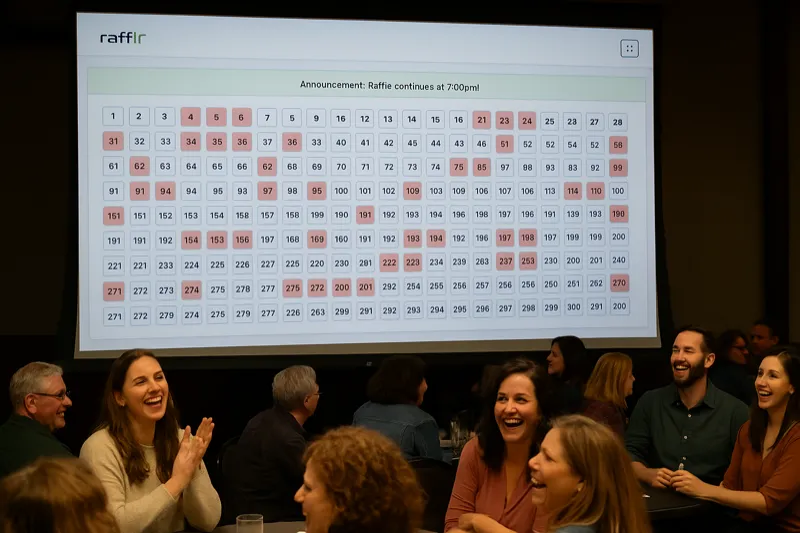
A last man standing raffle is a fundraising event where tickets are drawn and eliminated throughout the evening. Instead of drawing a winner immediately (like a traditional raffle), you draw losers. Each ticket pulled is removed from the pool, and the suspense builds as fewer and fewer numbers remain on the board. The very last ticket standing wins the grand prize.
The format goes by several names depending on the region and the organization running it:
- Reverse raffle -- the most common term nationwide
- Last man standing raffle -- popular in the Midwest and with sports booster clubs
- Elimination raffle -- a straightforward descriptive name
- Countdown raffle -- emphasizes the shrinking pool of tickets
Regardless of what you call it, the mechanics are identical. If you want a deeper dive into the core concept, read our full explainer on what a reverse raffle is.
How a Last Man Standing Raffle Works Step by Step
Running a last man standing raffle follows a clear sequence. Here is how a typical event unfolds from start to finish.
1. Sell a Limited Number of Tickets
Unlike traditional raffles where you sell as many tickets as possible, a last man standing raffle caps the number sold. Most events sell between 200 and 500 tickets at a premium price ranging from $50 to $500 each. The limited supply creates scarcity, which drives demand and justifies the higher price point.
2. Host a Dedicated Event
The drawing happens at a live event, typically paired with dinner, drinks, and socializing. The event format is what makes last man standing raffles so profitable. Attendees are not just buying a raffle ticket -- they are buying an evening of entertainment with real stakes.
3. Display All Ticket Numbers
At the start of the event, all ticket numbers are displayed on a board or screen so every participant can see their number in play. This visual element is critical. It gives the crowd something to follow and react to throughout the night.
4. Begin the Elimination Drawing
The emcee or host draws ticket numbers at a pace that matches the flow of the evening. Early rounds eliminate tickets in larger batches (10-30 at a time) to thin the field quickly. As the pool shrinks, the pace slows. The final 20 tickets are drawn one at a time, building maximum tension.
5. Award the Grand Prize
When only one ticket remains on the board, that ticket holder wins the grand prize. Many events also award smaller prizes at milestones along the way (for example, every 50th ticket eliminated might win a gift card or secondary prize).
For a more detailed walkthrough with timeline planning and logistics, see our complete guide to running a reverse raffle.
See rafflr in Action
Watch a 2-minute demo of how easy it is to create and run a reverse raffle with rafflr
Last Man Standing vs Reverse Raffle vs Traditional Raffle
People often search for these terms separately, so it helps to see exactly how they compare. The short version: a last man standing raffle and a reverse raffle are the same thing. A traditional raffle is a completely different format.
| Feature | Traditional Raffle | Last Man Standing / Reverse Raffle |
|---|---|---|
| How a winner is chosen | First ticket drawn wins | Last ticket remaining wins |
| Ticket quantity | Unlimited | Limited (200-500) |
| Ticket price | $1-$25 | $50-$500 |
| Drawing duration | Seconds to minutes | 2-3 hours |
| Event required | No | Yes |
| Entertainment value | Low | High |
| Fundraising structure | Usually a short standalone drawing | Often part of a longer live event |
| Audience engagement | Brief | Sustained all evening |
| Additional revenue streams | Limited | Side pots, buy-backs, bar, sponsors |
The key takeaway: if someone tells you they went to a "last man standing raffle," they attended a reverse raffle. The experience, the rules, and the excitement are identical.
Last Man Standing Raffle Rules
Clear rules are essential for a fair and well-organized event. Here are the standard rules most organizations use. For printable templates and legal language, visit our dedicated reverse raffle rules page.
Ticket Rules
- Each ticket is assigned a unique number
- One ticket per person (or per couple, depending on the event)
- Tickets are non-transferable after purchase unless otherwise stated
- All ticket sales are final -- no refunds
- A limited number of tickets will be sold (state the exact number)
Drawing Rules
- All drawings are random and automated (or conducted by a neutral third party)
- Once a ticket number is drawn, it is eliminated and cannot win the grand prize
- The last ticket number remaining wins the grand prize
- Participants do not need to be present to win (or must be present -- state clearly)
- The organization reserves the right to adjust the pace of the drawing
Prize Rules
- The grand prize goes to the holder of the last remaining ticket
- Intermediate prizes (if any) are awarded at predetermined milestones
- All prizes are subject to applicable taxes -- winners are responsible for reporting
- Cash prizes may be paid by check within a stated number of business days
- Prizes are non-negotiable and cannot be exchanged
General Event Rules
- Participants must be 18 years of age or older
- The organization's decisions regarding the drawing are final
- In the event of a dispute, the organization will determine the resolution
- All proceeds benefit the stated cause or organization
Setup Guide: How to Run a Last Man Standing Raffle
Planning a last man standing raffle takes about 8-12 weeks. Here is a condensed timeline to keep you on track.
12 Weeks Before the Event
- Set a date and book your venue
- Decide on the number of tickets and price per ticket
- Determine your grand prize (cash prizes tend to sell the most tickets)
- Create a planning committee with clear roles
- Choose your raffle software (more on this below)
8 Weeks Before
- Launch ticket sales with early-bird pricing or incentives
- Begin marketing through email, social media, and word of mouth
- Secure event sponsors for additional revenue
- Plan the menu, bar setup, and entertainment between drawing rounds
4 Weeks Before
- Send reminder communications to ticket holders
- Finalize the event run-of-show and drawing pace
- Confirm catering, AV equipment, and any rentals
- Test your raffle software with a practice run
Week of the Event
- Assign volunteer roles (registration, emcee support, AV, etc.)
- Set up the venue and test the display board and sound system
- Print participant name tags and seating assignments
- Finalize ticket sales and prepare the drawing board
Day of the Event
- Arrive early for final setup and sound check
- Greet guests and build excitement during dinner
- Begin the drawing after dinner -- pace it for 2-3 hours
- Award prizes, thank sponsors, and celebrate the winner
Tips for Running a Successful Last Man Standing Raffle
Organizations that run these events year after year have learned what works. Here are the strategies that separate a good event from a great one.
Get the Pacing Right
Pacing is the single most important factor in keeping the crowd engaged. Eliminate tickets quickly at the start when there are hundreds of numbers on the board. Slow down as the field narrows. The final 10 tickets should be drawn one at a time with dramatic pauses and crowd interaction.
Use a Professional Display
A digital board projected onto a large screen transforms the experience. When 300 ticket numbers are visible on a board and the crowd watches them disappear in real time, it creates a level of engagement that paper-and-pen methods simply cannot match.
Keep the Energy Up Between Draws
The best events fill the gaps between drawing rounds with entertainment: music, trivia, side games, or emcee commentary. Do not let the room go quiet. The energy in the room directly correlates with how much people spend on side pots and add-ons.
Offer a Cash Grand Prize
Cash prizes consistently outsell physical prizes when it comes to ticket sales. A $5,000 or $10,000 cash prize is universally appealing and easy to promote. If you want to offer a physical prize (like a vacation package), consider giving the winner the choice between the item and a cash equivalent.
Sell Out Your Tickets
Scarcity drives urgency. If you are selling 300 tickets, market the fact that there are only 300 available. Send updates as the count drops: "Only 50 tickets left!" This creates fear of missing out and accelerates late sales.
Common Variations of the Last Man Standing Raffle
The basic format is flexible enough to support a range of add-ons that increase revenue and audience engagement. Here are the most popular variations.
Buy-Backs
After a ticket is eliminated, the holder can purchase a "buy-back" to re-enter the drawing. Buy-backs are usually sold at a premium (often $20-$50) and can generate significant additional revenue. Most organizations limit the number of buy-backs available to maintain the integrity of the game. For a deeper look at this feature, see our buy-back numbers guide.
Side Pots
A side pot is a separate pool of money that participants can buy into alongside the main drawing. Side pots operate independently -- they might be a 50/50 drawing, a second-chance elimination, or a separate raffle for a different prize. They give eliminated participants a reason to stay engaged (and spending) for the rest of the night.
Split-the-Pot Option
When the field narrows to the final 5-10 tickets, remaining participants are given the option to split the prize pool evenly rather than continuing the elimination. This adds a strategic and social dynamic to the game: do you take the guaranteed share or gamble for the full prize? The crowd loves watching this decision play out.
Milestone Prizes
Awarding smaller prizes at predetermined milestones (for example, every 50th ticket drawn wins a $100 gift card) keeps eliminated participants interested and gives everyone more chances to win something. This is especially effective at events where not all ticket holders are present in the room.
Speed Rounds
A speed round is a burst of rapid-fire eliminations set to music or accompanied by visual effects. Speed rounds inject energy into the middle of the event when attention might be lagging. After a speed round, you return to the normal pace, and the crowd re-engages with renewed focus.
Charity Auction Hybrid
Some organizations run a mini live auction between drawing rounds. This is particularly effective when you have donated items that work better in an auction format than as raffle prizes. The combination of a last man standing raffle and a live auction can maximize revenue from a single evening.
Best Software for Last Man Standing Raffles
Running a last man standing raffle manually -- with physical tickets, a whiteboard, and a marker -- works for small events. But once you have more than 100 tickets, dedicated software makes a dramatic difference in the professionalism and smoothness of your event.
rafflr is built specifically for last man standing and reverse raffle events. Here is what it provides:
- Digital display board -- Show all ticket numbers on a projected screen. Eliminated numbers disappear with animations and sound effects that keep the crowd engaged.
- Automated random drawing -- No need for a physical drum or manual selection. The software handles randomization so every draw is provably fair.
- Customizable pacing -- Draw one ticket at a time or eliminate batches. Control the pace from your phone, tablet, or laptop.
- Buy-back support -- Enable buy-backs with a tap. Bought-back numbers re-appear on the board automatically.
- Side pot management -- Run side pots alongside the main drawing without any manual tracking.
- Sponsor branding -- Display sponsor logos between rounds for additional revenue opportunities.
- Works on any device -- No special hardware required. Just a laptop, a projector, and a Wi-Fi connection.
For a broader comparison of the tools available, read our best reverse raffle software roundup.
Who Runs Last Man Standing Raffles?
This format is popular across a wide range of organizations. If your group can gather 100 or more supporters for a dinner event, a last man standing raffle is worth considering.
- Schools and PTAs -- Annual fundraising galas, booster clubs, and scholarship funds
- Churches -- Building campaigns, mission trips, and community outreach
- Fire departments and first responders -- Equipment drives and community events
- Youth sports organizations -- Season funding, travel teams, and facility upgrades
- Nonprofits -- Annual giving campaigns, donor appreciation events, and capital projects
- Fraternal organizations -- VFW posts, Elks lodges, Knights of Columbus, and Rotary clubs
- Civic groups -- Community improvement projects and local causes
Legal Considerations
Last man standing raffles are subject to the same laws and regulations as any other raffle. Requirements vary by state and locality, so do your homework before selling tickets. Common requirements include:
- Nonprofit or charitable organization status
- A raffle license or permit from your state or county
- Disclosure of odds, prize values, and how proceeds will be used
- Age restrictions (typically 18+)
- Reporting and record-keeping obligations
For a comprehensive overview of raffle regulations across all 50 states, see our online raffle laws guide.
Frequently Asked Questions
What is a last man standing raffle?
A last man standing raffle is an elimination-style raffle where ticket numbers are drawn and removed one by one throughout an event. The last ticket remaining wins the grand prize. It is essentially the same thing as a reverse raffle -- the terms are interchangeable.
Is a last man standing raffle the same as a reverse raffle?
Yes. A last man standing raffle and a reverse raffle are the same format. Both draw tickets to eliminate them rather than to pick a winner. The last ticket left wins. The only difference is the name -- "last man standing" is more common in certain regions and organizations.
How many tickets should I sell for a last man standing raffle?
Most successful events sell between 200 and 500 tickets. This range keeps odds attractive enough to justify higher ticket prices ($50-$500 each) while generating strong revenue. Selling fewer than 100 limits your fundraising potential, while more than 500 can make the drawing drag on too long.
How long does a last man standing raffle take?
A typical last man standing raffle drawing takes 2-3 hours when combined with a dinner event. The drawing itself can be paced to fit your schedule -- eliminating tickets in large batches early on and slowing to one-at-a-time draws for the final 10-20 tickets.
What software can I use to run a last man standing raffle?
rafflr is purpose-built software for running last man standing and reverse raffles. It provides a professional digital display board, automated random drawings, sound effects, customizable pacing, and features like buy-backs and side pots -- all controllable from any device.
Ready to Run Your Last Man Standing Raffle?
A last man standing raffle is one of the most effective and entertaining fundraising formats available. The combination of limited tickets, an exciting live event, and the dramatic elimination format consistently delivers higher revenue than traditional raffles while creating an experience your supporters will talk about all year.
Whether this is your first event or your tenth, the right software makes the difference between a smooth, professional evening and a stressful one. Get started with rafflr today and see how easy it is to run a last man standing raffle that your supporters will want to attend every year.