The reverse raffle board is the visual centerpiece of any reverse raffle event. As numbers are eliminated throughout the evening, participants watch their fate unfold on this display. Getting your reverse raffle board right creates excitement; getting it wrong creates confusion and frustration.
What Is a Reverse Raffle Board?
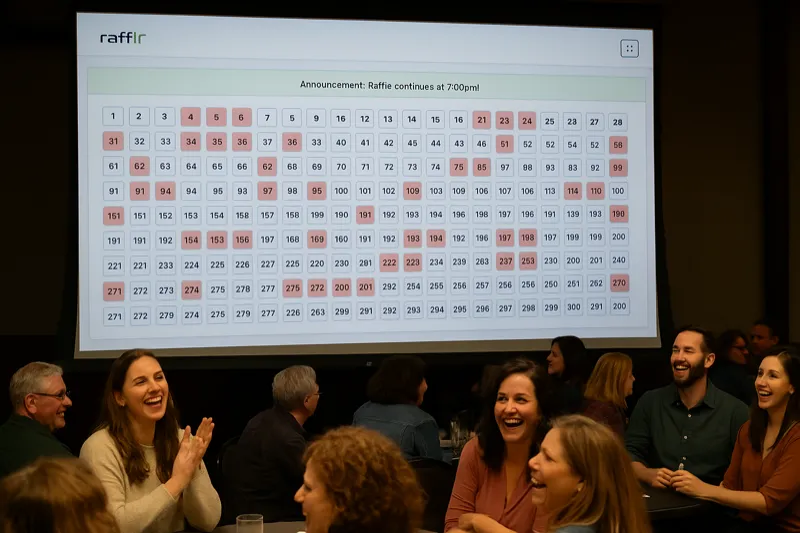
A reverse raffle board displays all ticket numbers in a grid format, allowing participants to track which numbers remain in play. As each number is eliminated during the drawing, it's marked or removed from the board. The excitement builds as the remaining numbers dwindle toward the final winner.
Unlike traditional raffles where a single number is drawn, reverse raffles create sustained engagement through the visual drama of elimination. The board makes this visible to everyone in the room.
Physical vs. Digital Reverse Raffle Boards
Traditional Physical Boards
Physical reverse raffle boards have been the standard for decades. Common types include:
Flip-Card Boards
- Numbers printed on cards that flip to show elimination
- Tactile and satisfying to operate
- Require manual operation for each elimination
- Can be slow for large number counts
Pegboard Systems
- Numbered tags hung on pegs
- Tags removed as numbers are drawn
- Visibility can be limited from distance
- Tags can fall or become disorganized
Whiteboard/Marker Boards
- Numbers written and crossed off
- Lowest cost option
- Difficult to read from distance
- Messy appearance as evening progresses
Digital Reverse Raffle Boards
Modern digital boards use software displayed through projectors or large screens:
- Professional appearance throughout the event
- Visible from anywhere in the room
- Automated elimination tracking
- Animations add excitement
- No physical setup or storage required
- Consistent presentation every time
See rafflr in Action
Watch a 2-minute demo of how easy it is to run a reverse raffle with professional software
Setting Up a Physical Reverse Raffle Board
Size and Visibility
Physical boards must be large enough to read from the back of your venue. Consider:
- Room size - Larger rooms need larger boards or multiple boards
- Number count - 200 numbers require more space than 100
- Lighting - Ensure adequate lighting on the board
- Viewing angles - Test visibility from different parts of the room
Number Layout
Organize numbers logically for easy scanning:
- Grid format with clear rows and columns
- Numerical order (1-10 in first row, 11-20 in second, etc.)
- Adequate spacing between numbers
- High contrast colors (dark numbers on light background)
Elimination Method
Choose a clear, visible way to mark eliminations:
- Removable cards or tags work best
- X marks can obscure the number and make it hard to see what was eliminated
- Color changes (red backing revealed) show clearly
- Consistency matters more than specific method
Setting Up a Digital Reverse Raffle Board
Equipment Needed
Digital boards require:
- Computer or tablet - To run the software
- Projector or large display - For audience visibility
- Screen or wall - Projection surface
- Cables - HDMI, VGA, or wireless connection
- Internet connection - For web-based software
Projector Considerations
Not all projectors work well for reverse raffle boards:
- Brightness - At least 3000 lumens for well-lit rooms
- Resolution - 1080p minimum for clear number display
- Throw distance - Ensure projector placement works for your screen size
- Keystone correction - Helps when projector can't be perfectly centered
Screen Placement
Position your digital reverse raffle board for maximum visibility:
- High enough for back-row viewing over heads
- Central location or multiple screens for large rooms
- Away from windows to prevent washout
- Consider sight lines from all seating areas
Best Practices for Reverse Raffle Board Presentation
Test Everything Before Guests Arrive
Technical problems during the event are unacceptable. Verify:
- All equipment connections work
- Software loads and operates correctly
- Display is visible from all seating areas
- Numbers are readable at actual projection size
- Sound effects work if using them
Have Backup Plans
Even reliable systems can fail. Prepare:
- Backup computer or device
- Printed number list for manual backup
- Someone who can troubleshoot technical issues
- Contact information for venue tech support
Control Pacing
The reverse raffle board is a tool for building excitement through pacing:
- Start faster when many numbers remain
- Slow down as the field narrows
- Pause for dramatic effect near the end
- Keep audience attention through controlled reveals
Engage the Audience
The board should enhance, not replace, audience engagement:
- Draw attention to the board during eliminations
- Call out notable moments (halfway point, final ten, etc.)
- Encourage audience reactions
- Use the visual drama to build excitement
rafflr's Digital Reverse Raffle Board Features
rafflr provides a purpose-built digital reverse raffle board designed specifically for live events:
Grid Display
All ticket numbers appear in a clean, organized grid that automatically adjusts to your ticket count. Whether you have 50 or 500 tickets, the display optimizes for readability.
Full-Screen Mode
The presentation fills your entire screen, eliminating browser toolbars and distractions. Your audience sees only the professional reverse raffle board.
Visual Elimination
As numbers are eliminated, they're visually marked on the board. Participants can instantly see which numbers remain and which are out.
Animation and Sound
Optional effects add excitement to the drawing. Sound effects and animations enhance the entertainment value without overwhelming the experience.
Works on Any Device
Because rafflr runs in your browser, it works on whatever device connects to your projector. No special software installation required.
Common Reverse Raffle Board Mistakes
Numbers Too Small
If participants can't read numbers from their seats, frustration builds. Always test visibility from the worst seats in the room.
Poor Lighting
Physical boards need direct lighting; digital boards need controlled ambient light to prevent washout. Plan lighting as part of your setup.
Inconsistent Operation
Whether physical or digital, operate your reverse raffle board consistently. Establish a rhythm and maintain it throughout the evening.
Ignoring Technical Setup Time
Digital boards require more setup than many organizers expect. Build in time for testing and troubleshooting before guests arrive.
Choosing Between Physical and Digital
The right choice depends on your situation:
Choose physical boards when:
- Venues lack projection capability
- Internet access is unreliable
- Traditional aesthetics matter for your audience
- Budget for digital equipment isn't available
Choose digital boards when:
- Professional presentation matters
- Large crowds need visibility
- You want automated tracking and pacing features
- Storage and transport of physical boards is challenging
Getting Started
Your reverse raffle board sets the tone for your entire event. Whether you choose physical or digital, invest time in planning, setup, and testing. The visual centerpiece of your reverse raffle deserves careful attention.
For digital reverse raffle boards that create professional, engaging experiences, get started with rafflr today and see how purpose-built software transforms your reverse raffle presentations.