Running one-off raffles can raise money, but building a comprehensive raffle program transforms occasional fundraising into a predictable revenue stream. Whether you're a nonprofit, school, church, or community organization, a well-structured raffle program creates donor engagement, volunteer enthusiasm, and sustainable funding for your mission.
What Is a Raffle Program?
A raffle program is an organized, ongoing approach to raffle-based fundraising rather than random, one-time events. Instead of scrambling to organize individual raffles when funds run low, a raffle program establishes a systematic approach with scheduled events, defined processes, and measurable goals.
Think of the difference between cooking a meal when you're hungry versus meal planning for the week. Both feed you, but one approach is reactive while the other is strategic. A raffle program brings that same strategic thinking to your fundraising efforts.
Types of Raffle Programs
Organizations typically structure their raffle programs in several ways:
- Annual signature events - One major raffle each year that becomes a community tradition
- Seasonal raffles - Quarterly or monthly events tied to holidays or occasions
- Ongoing calendar raffles - Daily or weekly drawings throughout the year
- Event-integrated raffles - Raffles built into other organizational events
- Hybrid programs - Combining multiple approaches for maximum impact
Benefits of a Structured Raffle Program
Predictable Revenue
When you run raffles sporadically, income is unpredictable. A raffle program with scheduled events allows you to forecast revenue and plan budgets accordingly. Organizations with established raffle programs report 40-60% more annual fundraising from raffles compared to ad-hoc approaches.
Stronger Donor Relationships
Regular raffle participants become invested in your organization's success. They look forward to events, bring friends, and often transition to other forms of giving. Your raffle program becomes a donor cultivation tool, not just a fundraising mechanism.
Operational Efficiency
Running your first raffle requires significant planning. Running your tenth raffle using established processes takes far less effort. A raffle program captures institutional knowledge, creates reusable templates, and trains volunteers who improve with each event.
Community Building
Signature raffle events become community traditions. People mark their calendars, organize groups to attend together, and share the experience with new community members. This social element amplifies your fundraising reach organically.
See rafflr in Action
Watch a 2-minute demo of how easy it is to run a reverse raffle with professional software
Building Your Raffle Program: A Step-by-Step Approach
Step 1: Assess Your Organization's Capacity
Before launching a raffle program, honestly evaluate what your organization can sustain. Consider:
- How many volunteers are available for raffle events?
- What's your budget for prizes and event costs?
- Does your state allow the type of raffles you're planning?
- What technology and tools do you currently have?
- How much time can staff dedicate to raffle coordination?
Starting small and scaling up beats overcommitting and burning out volunteers. A successful quarterly raffle program is better than a failed monthly one.
Step 2: Define Your Raffle Program Goals
Effective raffle programs have clear, measurable objectives beyond "raise money." Define specific goals:
- Revenue targets - How much do you aim to raise annually through raffles?
- Participation goals - How many people should each event engage?
- Growth metrics - What year-over-year improvement do you expect?
- Engagement objectives - How do raffles connect to broader donor relationships?
Step 3: Choose Your Raffle Formats
Different raffle formats serve different purposes within your program:
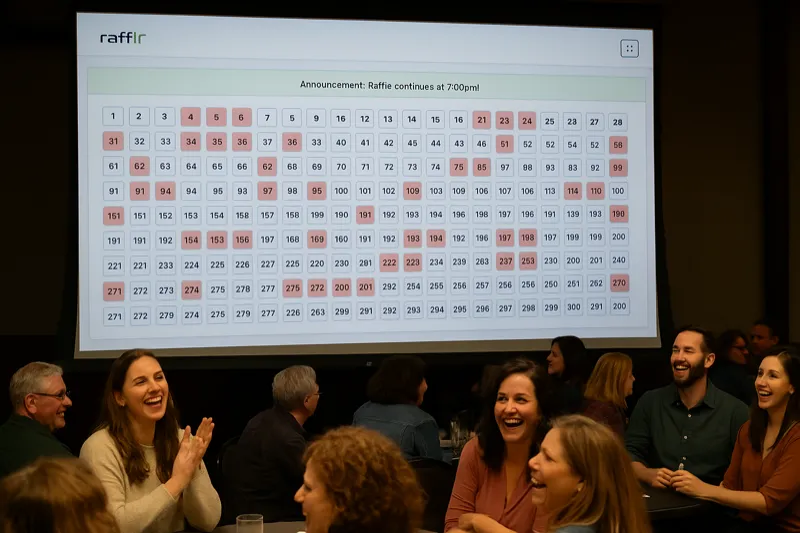
Reverse raffles work well for signature annual events. The elimination-style format creates sustained excitement throughout the evening, and higher ticket prices generate significant revenue. A reverse raffle typically becomes the centerpiece of a raffle program.
Traditional raffles fit smaller events or as add-ons to other gatherings. Lower ticket prices and multiple prize drawings appeal to broader audiences.
50/50 raffles require no prize procurement, making them easy additions to any event. The split-the-pot format appeals to those motivated by cash prizes.
Calendar raffles provide steady engagement throughout the year. Participants pay once and have chances to win throughout a month, quarter, or year.
Step 4: Create Your Annual Calendar
Map out your raffle program across the year. Consider:
- When are your supporters most available and generous?
- What community events can you tie into?
- When do you need revenue for organizational priorities?
- How much lead time does each event type require?
Most organizations find success with one signature event (often a reverse raffle), two to four supporting raffles, and optional ongoing elements like calendar raffles.
Step 5: Establish Processes and Documentation
Document everything so your raffle program survives staff and volunteer turnover:
- Event planning checklists with timelines
- Volunteer role descriptions and training materials
- Prize procurement strategies and sponsor contacts
- Marketing templates and communication schedules
- Financial procedures for ticket sales and payouts
- Post-event evaluation criteria
Technology for Your Raffle Program
The right tools make raffle programs sustainable. Manual processes that work for one event become unsustainable across multiple events per year.
Essential Technology Needs
- Ticket management - Tracking sales, assignments, and participant information
- Drawing management - Professional, verifiable random selection
- Display capabilities - Engaging presentations for live events
- Data tracking - Historical records for planning and compliance
Choosing Raffle Software
For the drawing and presentation aspects of your raffle program, professional software like rafflr eliminates the technical complexity of live events. Instead of worrying about whether your display will work or your drawing process looks professional, you can focus on engaging your audience and maximizing fundraising.
Key features to look for include full-screen display modes for projectors, customizable branding options, reliable random number generation, and the ability to handle different raffle formats from the same platform.
Marketing Your Raffle Program
Build Anticipation Throughout the Year
Don't wait until ticket sales open to start marketing. Keep your raffle program visible year-round:
- Share photos and stories from past events
- Announce dates early so supporters can plan
- Highlight what past raffles have funded
- Create "save the date" campaigns
Leverage Your Winners
Winners are your best marketers. With permission, share their excitement through photos, testimonials, and social media. "Real people winning real prizes" builds credibility and interest for future events.
Create Urgency Without Pressure
Limited tickets, early-bird pricing, and genuine scarcity drive action. If your reverse raffle has 300 tickets, communicate that limitation authentically. Sold-out events create demand for next year.
Measuring Raffle Program Success
Track metrics beyond gross revenue to understand your raffle program's true performance:
- Net revenue - Revenue minus all costs (prizes, venue, marketing, etc.)
- Participation rate - Percentage of your community who participates
- Retention rate - How many participants return for subsequent events
- Referral rate - New participants brought by existing supporters
- Volunteer hours - Investment required to execute events
- Sponsor satisfaction - Feedback from prize donors and sponsors
Common Raffle Program Mistakes to Avoid
Overextending Too Quickly
Organizations excited by early success sometimes expand their raffle program too fast. Each event requires planning, promotion, and execution. Volunteer burnout from too many events undermines long-term sustainability.
Neglecting Legal Requirements
Raffle regulations vary significantly by state and organization type. What works in one jurisdiction may be illegal in another. Build compliance review into your raffle program processes from the start.
Ignoring Data
Organizations that don't track results can't improve. Collect data from every event, analyze trends, and adjust your raffle program based on what the numbers reveal.
Treating Every Event the Same
Your signature annual reverse raffle deserves different treatment than a small 50/50 at a monthly meeting. Calibrate marketing effort, volunteer investment, and production quality to each event's role in your overall raffle program.
Sustaining Your Raffle Program Long-Term
Develop Volunteer Leadership
Identify and develop raffle champions within your volunteer base. These individuals carry institutional knowledge and provide continuity when other volunteers rotate.
Refresh Without Abandoning
Successful raffle programs evolve while maintaining core traditions. Introduce new elements gradually, keep what works, and retire ideas that no longer resonate. Balance innovation with the comfort of familiar traditions.
Connect Raffles to Mission
Participants should understand how their raffle support advances your organization's mission. Tie raffle revenue to specific programs or needs. "This year's raffle funded..." stories create meaning beyond the gaming excitement.
Getting Started with Your Raffle Program
Building a raffle program doesn't require perfection from day one. Start with a single well-executed event, document what you learn, and build from there. Each successful raffle creates momentum for the next.
The organizations that raise the most through raffles aren't necessarily the largest or best-resourced. They're the ones that approach raffle fundraising systematically, learn from each event, and build programs that grow stronger over time.
Ready to elevate your raffle events with professional presentation tools? Get started with rafflr today and see how the right software makes running your raffle program easier and more engaging for everyone involved.