The church drawdown is one of the most beloved and profitable fundraising traditions in the Gulf South. From Catholic school halls in Jackson, Mississippi to parish centers in Baton Rouge, Louisiana, drawdowns bring entire communities together for an evening of fellowship, excitement, and serious fundraising. If your church is considering a drawdown for the first time, or looking to take your annual event to the next level, this guide covers everything you need to know.
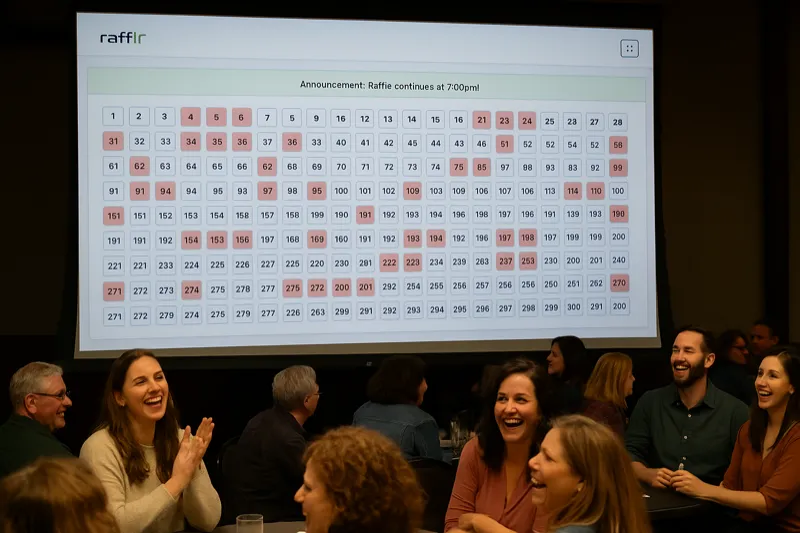
Why Churches Love Drawdowns
Drawdowns (also called reverse raffles outside the Gulf South) have been a staple of church fundraising for decades, and for good reason. The format solves several problems that plague other fundraising methods.
Community Building
Unlike a silent auction where people drift in and out, or a bake sale that happens in passing, a drawdown keeps your entire congregation in one room for the whole evening. Parishioners sit together, eat together, cheer together, and groan together as numbers get eliminated. It builds relationships that strengthen your church community far beyond the fundraising itself.
High Revenue Per Event
A well-run church drawdown can raise $10,000 to $50,000 in a single evening. That is more than most churches raise from months of bake sales, car washes, and collection plate appeals combined. The premium ticket pricing model (typically $50 to $150 per ticket) means significant revenue even with modest attendance.
Predictable Income
Because you set the ticket count and price in advance, you know your gross revenue before the event even starts. If you sell 300 tickets at $100 each, you know you will bring in $30,000 from ticket sales alone. That predictability makes budgeting straightforward and gives your finance committee confidence.
Annual Tradition
The best church drawdowns become annual traditions that parishioners look forward to all year. People mark their calendars months in advance. Tickets sell out faster each year. The event becomes part of your church's identity and culture, making it easier to organize and more successful over time.
Planning Your Church Drawdown Step by Step
A successful church drawdown requires planning, but it is not complicated. Here is a timeline-based approach that works for churches of all sizes.
12 Weeks Before: Foundation
- Form your committee. You need 5 to 10 committed volunteers. Key roles include: event chair, ticket sales coordinator, food and beverage coordinator, sponsor coordinator, and event night emcee.
- Set your date. Friday or Saturday evenings work best. Avoid conflicts with major holidays, school events, and other parish activities. Fall and spring are the most popular seasons for church drawdowns.
- Choose your venue. Your parish hall or school gymnasium is the natural choice. Make sure it can comfortably seat your expected attendance with room for a projector screen and emcee area.
- Determine ticket count and price. Start with your fundraising goal and work backward. If you want to net $20,000 and plan to spend $5,000 on the grand prize and $5,000 on food and expenses, you need $30,000 in ticket revenue. That is 300 tickets at $100 each, or 400 tickets at $75 each.
- Decide on prizes. Lock in your grand prize and consolation prize structure early because this is what sells tickets.
8 Weeks Before: Preparation
- Begin ticket sales. Print physical tickets with unique numbers. Sell through the parish office, after Sunday Masses, and through committee members. Track every sale carefully.
- Secure sponsors. Approach local businesses for sponsorships. More on this below.
- Plan the menu. Catered meals, potluck, or a combination. Many successful church drawdowns offer a sit-down dinner included in the ticket price.
- Line up your drawdown software. Choose an electronic drawdown board and do a test run so your team is comfortable with it before event night.
- Recruit your emcee. A parishioner with a big personality and comfort on the microphone is ideal. Give them time to prepare.
4 Weeks Before: Promotion Push
- Ramp up ticket sales. Make announcements at every Mass. Send emails. Post on social media. Have committee members personally invite friends and family.
- Finalize logistics. Confirm caterer, beverages, decorations, audio/visual equipment (projector, speakers, microphone), and table assignments.
- Prepare the program. Create a printed program or digital display showing sponsors, prize structure, event timeline, and drawdown rules.
- Organize side activities. Plan any additional revenue generators: silent auction, 50/50 raffle, heads or tails game, dessert auction.
Week of Event: Final Details
- Confirm final ticket count. If you have not sold out, make a final push. If you have sold out, congratulations -- that is the best possible position.
- Set up the venue. Tables, chairs, decorations, projector screen, sound system, registration table, and bar area.
- Test your technology. Run the drawdown software on the actual laptop and projector you will use at the event. Test the full-screen presenter view. Make sure everything works.
- Brief your volunteers. Everyone should know their role for the evening. Who handles registration? Who runs the bar? Who manages the drawdown software? Who handles buy-backs?
See rafflr in Action
Watch a 2-minute demo of how easy it is to run a church drawdown with professional software
Prize Ideas for Church Drawdowns
Your prizes sell the tickets. Here are the most effective prize structures for church drawdowns:
Grand Prizes That Sell Tickets
- Cash ($5,000 to $25,000) -- By far the most popular option. Cash is universally appealing and easy to promote. "Win $10,000 cash" is a more compelling headline than almost any physical prize.
- Vacation packages -- A week at a beach condo, a cruise, or a getaway package. These are exciting to promote and often donated or discounted through parish connections.
- Tuition credit -- For Catholic school drawdowns, a full or partial year of tuition is incredibly compelling for families with children in the school.
- Luxury electronics bundle -- A large TV, gaming system, laptop, and accessories can make an attractive prize package.
Consolation Prize Structure
Consolation prizes keep the excitement alive throughout the evening. A common structure:
- Last 50 numbers -- $50 gift card or small prize for each person entering the final 50
- Last 25 numbers -- $100 gift card
- Last 10 numbers -- $250 cash or prize
- Last 5 numbers -- $500 cash each
- Runner-up (last 2) -- $1,000 cash
- Winner (last number) -- Grand prize
This layered structure creates multiple moments of celebration throughout the drawdown and gives more people a reason to stay engaged even as the field narrows.
Ticket Pricing for Church Drawdowns
Getting your ticket pricing right is critical. Price too low and you leave money on the table. Price too high and you struggle to sell out. Here are guidelines based on what works at successful church drawdowns:
- $50 per ticket -- Good for smaller parishes, rural communities, or first-time events where you are testing the concept. Best paired with a lower ticket count (200 or fewer) and a modest grand prize ($2,500 to $5,000).
- $75 per ticket -- A sweet spot for many church drawdowns. Accessible enough for most parishioners while generating solid revenue. Works well with 200 to 300 tickets and a $5,000 to $10,000 grand prize.
- $100 per ticket -- The most common price point for established church drawdowns. At $100, a 300-ticket drawdown generates $30,000 in ticket sales. Pair with a $10,000 cash grand prize for maximum appeal.
- $125 to $150 per ticket -- Appropriate for larger parishes in affluent communities with established drawdown traditions. These higher-priced events often include premium dinner, open bar, and substantial prize packages. Works best when your drawdown has a track record of selling out.
Whatever price you choose, make sure the ticket includes dinner. "Tickets: $100 (includes dinner and drinks)" is much more appealing than "$100 ticket + $25 dinner." Bundle the cost.
Getting Sponsors for Your Church Drawdown
Sponsorships can offset your event costs and add prestige to your drawdown. Here is how to approach it:
Who to Ask
- Businesses owned by parishioners -- Start here. People who are already invested in your church are the most likely sponsors.
- Local businesses near the church -- Restaurants, auto dealers, banks, insurance agencies, and medical practices often sponsor church events for community visibility.
- Businesses that serve your parish -- Your church's landscaper, HVAC company, plumber, and other service providers.
- Past donors and supporters -- Anyone who has given to your church before is a potential sponsor.
Sponsorship Tiers
Create tiered packages that give sponsors clear value:
- Gold ($1,000+) -- Logo on the electronic drawdown board (visible all evening on the projector screen), reserved table, program mention, social media posts, verbal recognition by emcee.
- Silver ($500) -- Table signage, program mention, social media recognition, verbal mention.
- Bronze ($250) -- Program mention and social media recognition.
The electronic drawdown board sponsor placement is a powerful selling point. When you use software like rafflr that supports sponsor overlays, the sponsor's logo appears on the big screen throughout the event -- potentially for hours of visibility in front of their target audience.
Running the Event Night
Event night is where all your planning pays off. Here is a typical timeline for a church drawdown:
Sample Event Timeline
- 5:00 PM -- Doors open for setup volunteers. Set up tables, decorations, registration area, projector and screen, and bar.
- 6:00 PM -- Doors open for guests. Registration and drink service begin. Background music playing.
- 6:30 PM -- Dinner is served. Social hour continues. Emcee welcomes everyone and reviews the evening's schedule.
- 7:30 PM -- Drawdown begins. Emcee explains the rules. First numbers are drawn slowly, building anticipation.
- 8:00 PM -- Drawing pace increases. Auto-pull mode keeps numbers flowing. Consolation prizes awarded at milestones. Buy-backs offered to eliminated ticket holders.
- 9:00 PM -- Final 10 numbers. Dramatic slowdown. Crowd fully engaged. Side bets and deals between remaining ticket holders add to the excitement.
- 9:30 PM -- Winner crowned. Grand prize awarded. Final announcements and thanks to sponsors, volunteers, and attendees.
- 10:00 PM -- Event wraps up. Cleanup begins.
Tips for a Smooth Event Night
- Use a printed or displayed cheat sheet with rules so guests can reference them.
- Have a dedicated buy-back station where eliminated ticket holders can pay to get back in.
- Keep the bar open throughout the drawdown. Revenue from drinks adds up.
- Take photos and video for promoting next year's event.
- Have cash and Venmo/Zelle ready for buy-backs and side games.
- Thank sponsors from the stage multiple times throughout the evening.
Best Software for Church Drawdowns
The right software transforms your church drawdown from a logistical headache into a seamless experience. Here is what to look for and why rafflr is the top choice for church drawdowns:
Why rafflr Works for Churches
- Any volunteer can run it. Setup takes 60 seconds. Type the number of tickets, and your drawdown board is ready. No tech skills, no training sessions, no complicated configuration.
- Up to 1,000 tickets. Whether your drawdown has 100 tickets or 1,000, rafflr handles it. Many competitors cap at 500.
- Works on any device. Mac, PC, tablet, or phone. Web-based with no downloads required. Bring any laptop and plug it into your projector.
- Sponsor overlays. Display your sponsors' logos on the big screen throughout the drawdown. This is a major selling point when recruiting sponsors.
- Buy-back support. Track buy-backs digitally so you never lose track of who is back in the game.
- Auto-pull mode. Set the drawing speed and let the software run automatically. Your emcee can focus on entertaining instead of clicking buttons.
- Affordable pricing. $77 for a single drawdown, $97/year for unlimited events, or $497 for lifetime access. Straightforward pricing, no per-ticket charges.
Read the full reverse raffle software comparison to see how rafflr compares to other platforms.
Frequently Asked Questions
How much can a church drawdown raise?
A well-organized church drawdown typically raises between $10,000 and $50,000 in a single evening. Revenue depends on ticket count, pricing, and additional activities. A 300-ticket drawdown at $100 per ticket generates $30,000 in ticket sales alone, plus buy-backs, sponsors, and side games can add thousands more.
What is a good ticket price for a church drawdown?
Most church drawdowns price tickets between $50 and $150 each. The sweet spot depends on your community. Rural parishes often succeed at $50 to $75, while urban and suburban churches can charge $100 to $150. Always include dinner in the ticket price.
What prizes work best for church drawdowns?
Cash grand prizes ($5,000 to $25,000) are the most popular and easiest to promote. Other effective prizes include vacation packages, luxury electronics, and tuition credits for Catholic schools. Consolation prizes at milestones keep excitement high throughout.
How do I get sponsors for a church drawdown?
Start with businesses owned by parishioners and local businesses near the church. Offer tiered sponsorship packages ($250, $500, $1,000) that include logo placement on the electronic drawdown board, table signage, program mentions, and social media recognition. Be sure to check your state's raffle laws for any sponsorship disclosure requirements.
Make Your Church Drawdown Unforgettable
A church drawdown is more than a fundraiser. It is a community event that brings parishioners together, strengthens relationships, and generates the revenue your church needs to fulfill its mission. The format has been proven over decades by hundreds of churches across Mississippi, Louisiana, Texas, and beyond.
With the right planning, the right prizes, and the right software, your church drawdown can become the most anticipated event on your parish calendar. Start planning today and give your community an evening they will talk about all year.
For more church fundraising ideas, explore our guides on creative church raffle ideas and church reverse raffle fundraising.