A car raffle is one of the highest-revenue single-event fundraisers an organization can run. A $30,000 vehicle with 300 tickets at $100 each grosses $30,000, and with the right strategy you can raise far more. The key is matching your vehicle choice, ticket pricing, and drawing format to your audience. Here's exactly how to plan and execute one.
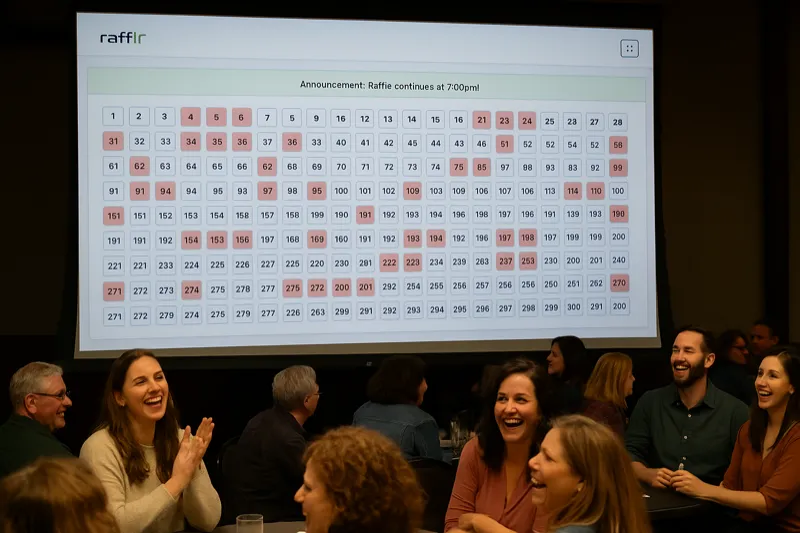
How It Works
The concept is straightforward: your organization offers a car as the grand prize, sells a limited number of tickets at a premium price, and holds a drawing event to select the winner. Because the prize has obvious, tangible value, tickets almost sell themselves once people see a real vehicle on display.
There are two primary formats for the drawing itself:
- Traditional raffle: Draw one ticket from the pool. That person wins the car. It takes about 15 seconds. The crowd claps and goes home.
- Reverse raffle: Draw tickets one at a time, and each drawn ticket is eliminated. The last ticket remaining wins the car. This can take 30 to 90 minutes depending on ticket count, and the tension builds with every number called.
The reverse raffle format is significantly better for vehicle raffles, and it's not close. When everyone in the room is a potential winner until their number gets called, they stay engaged, they stay at the event, and they keep spending money on food, drinks, and side games. A traditional drawing ends the suspense instantly. A reverse raffle stretches it into an entire evening of entertainment.
The format also justifies higher ticket prices. When someone pays $100 or $200 for a ticket, they expect more than a 3-second drawing. A reverse raffle delivers a full event experience: dinner, drinks, socializing, and a drawn-out, nerve-wracking elimination where their number could be the last one standing.
Legal Requirements You Can't Skip
Raffling a car involves real money and a valuable asset, which means state gambling laws apply. Most states require your organization to hold 501(c)(3) nonprofit status and obtain a specific raffle permit or license before selling tickets. Some states restrict the maximum prize value or the number of raffles you can run per year.
Beyond the raffle permit itself, there are vehicle-specific considerations:
- Title transfer: You need the vehicle title in your organization's name before the drawing. If a dealership is donating the car, get the title paperwork sorted weeks in advance, not the day of the event.
- Tax reporting: The IRS requires you to file Form W-2G if the prize value exceeds $600. The winner is responsible for paying income tax on the fair market value of the vehicle. Make this crystal clear in your raffle rules and on the ticket itself so there are no surprises.
- Insurance: You need insurance coverage on the vehicle from the moment you take possession until the moment you hand over the keys. Your organization's general liability policy may not cover a parked vehicle at an event venue.
- State-specific rules: Some states prohibit vehicle raffles entirely, others cap ticket prices, and a few require you to register the raffle with the state attorney general's office.
Check your state's specific requirements before you commit to anything. The state-by-state raffle laws guide covers the basics for all 50 states, but always confirm with a local attorney for vehicle-specific rules. Getting this wrong can result in fines, and in some states, criminal charges.
Choosing the Right Vehicle
The vehicle you raffle determines everything downstream: your ticket price, your target audience, and your profit margin. There are three ways to source a car, and they're not equally good.
Donated vs. Purchased vs. Partnership
| Sourcing Method | Upfront Cost | Profit Margin | Best For |
|---|---|---|---|
| Dealership donation | $0 | 100% of ticket sales | Organizations with strong local business relationships |
| Purchased outright | $20,000 - $45,000 | Ticket revenue minus car cost | Organizations with cash reserves or sponsorship funds |
| Dealer partnership | $0 (dealer provides at cost) | Higher than purchased, lower than donated | Organizations that can offer advertising value to the dealership |
A dealership donation is the best-case scenario. The dealer gets a tax write-off and community visibility, and you get 100% profit on every ticket sold. Approach local dealerships 4 to 6 months before your event. Offer prominent logo placement on all marketing materials, signage at the event, and a speaking spot during the drawing. Many dealers will provide a vehicle at cost if a full donation is off the table.
As for the vehicle itself, choose something with universal appeal. Mid-size trucks and SUVs consistently outperform sports cars and sedans for raffle prizes. A $35,000 truck appeals to nearly everyone in the room. A $35,000 two-seater sports car appeals to a narrow slice of your audience. When in doubt, go practical.
One thing to avoid: do not lease or rent a vehicle for display purposes with the intention of buying it only if ticket sales hit a threshold. This creates legal exposure if ticket buyers feel misled, and most states require you to have the prize in hand before selling tickets.
Ticket Pricing: The Math That Matters
Ticket pricing is where most organizations either leave money on the table or price themselves out of their market. The rule of thumb: your gross ticket revenue should be 1.5 to 2 times the car's value. That gives you a healthy profit margin even if you purchased the vehicle.
Here's how the numbers play out across three common scenarios:
| Scenario | Car Value | Tickets | Price Each | Gross Revenue | Net (Donated Car) | Net (Purchased Car) |
|---|---|---|---|---|---|---|
| Conservative | $25,000 | 300 | $100 | $30,000 | $30,000 | $5,000 |
| Moderate | $30,000 | 400 | $100 | $40,000 | $40,000 | $10,000 |
| Aggressive | $40,000 | 250 | $200 | $50,000 | $50,000 | $10,000 |
Notice the "Aggressive" scenario: fewer tickets at a higher price point actually generates the most revenue. This works when your audience has the disposable income for $200 tickets and when the vehicle justifies that price. A $40,000 truck with only 250 tickets gives buyers a 1-in-250 shot at a real prize, which is far better odds than any lottery.
The key variable is sell-through rate. Printing 400 tickets means nothing if you only sell 280. Be realistic about your organization's reach. If your last event sold 200 dinner tickets, don't assume you'll sell 400 raffle tickets at $100 each. Start with a number you're confident you can sell out, and build from there in future years.
For a deeper dive into pricing psychology and bundle strategies, the raffle ticket pricing guide covers single-ticket vs. multi-pack approaches that can increase your average revenue per buyer.
See rafflr in Action
Watch a 2-minute demo of how easy it is to create and run a reverse raffle with rafflr
Running Drawing Night as a Reverse Raffle
Drawing night is where the reverse raffle format turns a fundraiser into an event people talk about for months. Instead of pulling one winning ticket and calling it a night, you eliminate numbers one at a time. The last ticket standing wins the car.
Here's why this matters for revenue: when every person in the room is a potential winner until their number is called, they stay. They order another round of drinks. They bid on silent auction items. They buy into side games. A traditional raffle drawing ends the energy the moment you call the winner. A reverse raffle sustains that energy for the entire evening.
The format also opens up buy-back opportunities. When the field narrows to the final 20 or 30 ticket holders, you can offer eliminated participants a chance to buy back into the drawing. This is pure additional revenue. Some organizations raise an extra $2,000 to $5,000 from buy-backs alone.
Professional display software makes a significant difference here. When the remaining numbers are shown on a large screen, the entire room can follow along. People see their number still alive. They watch it get closer to the end. The suspense is visual, shared, and impossible to ignore. Trying to run a 300-ticket reverse raffle by reading numbers off slips of paper will lose the crowd by ticket 50.
When a Car Raffle Isn't Right for Your Organization
Not every organization should raffle a vehicle. Here's when it doesn't make sense:
- You can't sell 200+ tickets. If your donor base or community reach is small, you may not move enough tickets at $100+ each to cover costs (especially if you're purchasing the vehicle). A $25,000 car with only 150 tickets sold at $100 means you lost $10,000.
- Your state restricts vehicle raffles. A handful of states either prohibit vehicle prizes, cap prize values below a typical car's worth, or require burdensome bonding requirements. Check before you plan.
- Your audience prefers lower-priced tickets. If your typical supporter buys $5 to $25 raffle tickets, jumping to $100 or $200 tickets will feel like a different event entirely. You may alienate your core base.
- You don't have insurance coverage. If you can't insure the vehicle from acquisition through the event, you're taking on significant liability. If the car is damaged, stolen, or involved in an incident at the venue, your organization is on the hook.
If any of these apply, consider a cash prize reverse raffle instead. A $5,000 or $10,000 cash grand prize still generates serious excitement, requires no title transfer or insurance, and works with lower ticket prices. You get most of the revenue upside without the logistical complexity of a vehicle.
Step-by-Step Timeline
A vehicle raffle has more moving parts than a typical fundraiser. Here's a realistic timeline that accounts for the vehicle logistics most organizations underestimate.
16 Weeks Before the Event
- Research your state's raffle laws and apply for the required permit. Some states take 4 to 6 weeks to process applications.
- Secure the vehicle. If approaching a dealership for a donation or partnership, bring a written proposal that includes their branding exposure, expected attendance, and media coverage.
- Get the vehicle title transferred to your organization's name.
- Obtain insurance coverage for the vehicle.
- Set your ticket quantity, price, and sales deadline.
12 Weeks Before the Event
- Begin ticket sales. Use both in-person and online channels. Display the actual vehicle at high-traffic locations (your building's lobby, community events, the dealership lot).
- Launch marketing: email campaigns to your donor list, social media posts with photos of the car, and flyers at local businesses.
- Set up your event logistics: venue, catering, AV equipment for the drawing display.
4 Weeks Before the Event
- Push hard on remaining ticket sales. If you're below 70% sold, consider adding multi-pack discounts (buy 3, get 1 free) to move inventory.
- Arrange for the vehicle to be displayed at the venue. Coordinate delivery timing with the venue and the dealership.
- Confirm all event-night details: registration process, number display setup, buy-back rules, and the drawing procedure.
- Prepare your tax reporting paperwork (Form W-2G for the winner).
Event Night
- Registration and check-in: verify ticket holders, distribute programs, and get everyone seated.
- Dinner and socializing: let people enjoy the evening before the main event.
- Reverse raffle drawing: display remaining numbers on screen, eliminate tickets one by one, run buy-back rounds when the field narrows.
- Award the car: hand over the keys, take photos, and handle the title transfer paperwork on the spot.
- Collect the winner's tax information (name, address, SSN) for Form W-2G filing.
Make It an Event, Not Just a Drawing
The organizations that raise the most treat the drawing as the centerpiece of a full evening, not a standalone moment. Pair the reverse raffle with dinner, an open bar, silent auction items, and side games. The car gets people in the door. Everything else keeps them spending.
If you've got the audience, the vehicle, and the legal clearance, a car raffle fundraiser is one of the most effective single-event revenue generators available to nonprofits. Plan it right, price it right, and run it as a reverse raffle, and you'll build an annual tradition that people look forward to every year.